
Platina Lab Maximizes Vibrancy with Live2D, a Korean Rhythm Game
Live2D로 생동감 극대화한, 국산 리듬게임 ‘플라티나 랩’
2026.04.15 14:06 UTC+9
AI Summary
A game that garnered attention by reaching 800% of its funding goal on Tumblbug in just three days in 2024 is Platina Lab, developed by HighEndGames. It boasts a keyboard-style gameplay familiar to rhythm game players, enhanced with cute characters, and has received positive reviews since its release, achieving a 'Very Positive' rating on Steam. While Platina Lab's appeal lies in its solid gameplay, its biggest draw is undoubtedly the characters brought to life with Live2D.
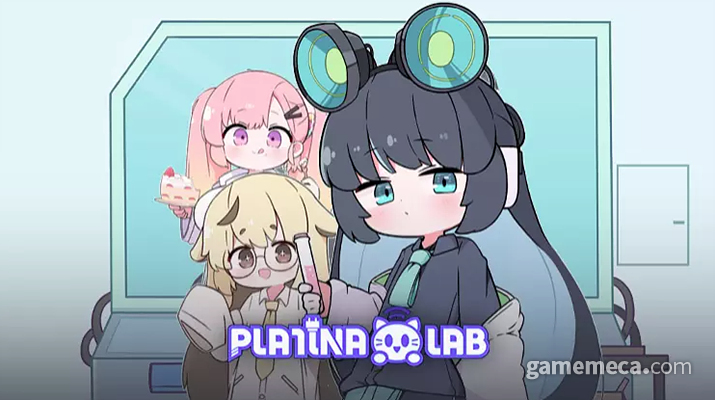
A game that set the internet ablaze by hitting 800% of its funding goal on Tumblbug in just three days back in 2024. That game is 'PLATiNA :: LAB' from HighEndGames. It boasts a familiar keyboard-style input system for rhythm game enthusiasts, enhanced with the charm of cute characters. Since its launch, it's been met with critical acclaim, holding a 'Very Positive' Steam user rating with 1,182 reviews (87% positive).
While PLATiNA :: LAB's appeal lies in its solid gameplay, its most significant draw is undoubtedly its characters, brought to life with the dynamism of Live2D. As the official launch approaches, user anticipation is building for the additional characters and content. We sat down with Kim Tae-jun, CEO of HighEndGames, to discuss the choice of Live2D, their achievements so far, and future plans.
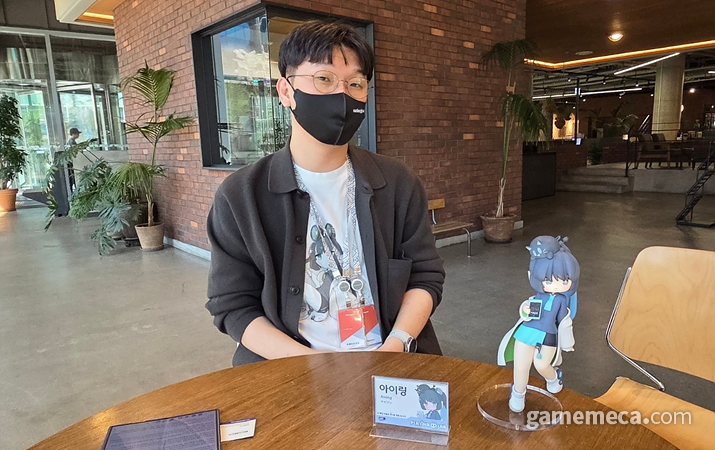
Q. First off, could you give us a brief introduction to PLATiNA :: LAB and the specific catalyst that led to its development?
Kim Tae-jun:PLATiNA :: LAB is a game that blends the fun of character collection with the rhythm game genre. It was created with the concept of conducting experiments alongside cute characters. The rhythm game genre itself is about 30 years old, and after experiencing countless titles, I decided to found this company in pursuit of my ideal rhythm game.PLATiNA :: LAB adopts the most familiar structure where notes fall from the top. However, we felt the need for a differentiating element. So, beyond just hitting notes, we've infused a sense of interaction with the characters. We wanted to fully capture the joy of growing cute characters within the game.
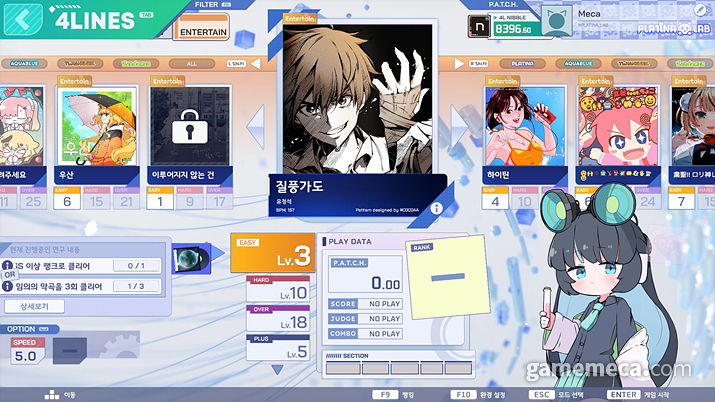
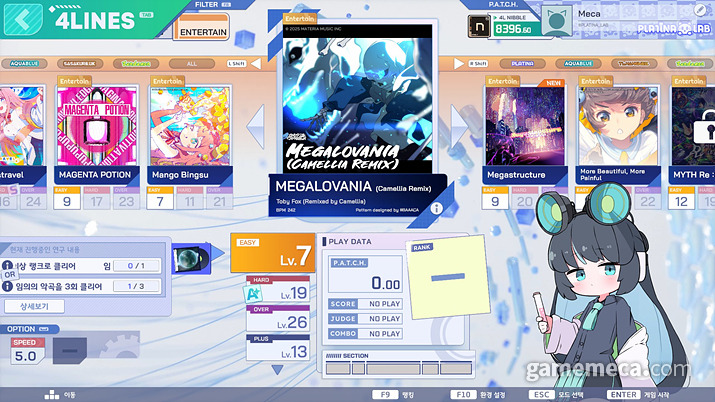
Q. The soundtrack is incredibly diverse, featuring nostalgic tracks like 'Jilpung Gado' alongside songs popular with subculture fans, such as Vocaloid tracks. Are there any specific criteria for selecting these music pieces?
Kim Tae-jun:As a rhythm game, securing music is our top priority. We focus on bringing in music that is widely loved by the public but not yet featured in other rhythm games. In particular, we are actively seeking and negotiating for songs from anime, popular game soundtracks, and Vocaloid-related subculture tracks favoured by younger audiences.While other companies rarely license Vocaloid or original tracks directly, we have contracts with JASRAC and NexTone in Japan, allowing us a streamlined system to license registered music. We believe music constitutes over half the appeal of a rhythm game, so we're concentrating on securing tracks that players will welcome.
Q. It's been a year since the Early Access launch. How would you assess your achievements during this period?
Kim Tae-jun:While we're cautious about revealing specific figures, our sales have been comparable to those of the most successful rhythm games we've experienced in the past. We are deeply grateful for the immense love from our users. Our current biggest challenge is raising awareness for the game, which is why we're consistently participating in offline events like TGS, PlayX4, and AGF.At the upcoming PlayX4, we're expanding our presence significantly, with a joint booth alongside Live2D headquarters, roughly five times the previous scale. We're also planning a competition using PLATiNA :: LAB on the main stage. Through these offline activities, we aim to showcase the game's growth potential and actively engage with our users.
Q. Were there any particular difficulties or memorable episodes during the development process?
Kim Tae-jun:Regarding difficulties, we encountered more unexpected bugs than anticipated during development, some of which required fundamental changes to the game's core. Fortunately, we've resolved most of those technical issues and are now in a stable development phase.Conversely, the most joyous moments were meeting and communicating with composers I've admired for years during the music licensing process. When I managed to connect with a composer I'd loved for a long time and had the chance to collaborate, it felt like becoming a 'successful fan' – a truly immense thrill. These experiences have been a powerful driving force for continuing development.
Q. When is the planned official launch date? And what new major content can we expect then?
Kim Tae-jun:We're aiming for an official launch in August of this year, and we plan to introduce three major content updates. Firstly, we'll be completely revamping the ranking system to enhance its competitive aspect. Secondly, we'll be sequentially unveiling a story mode, with plans to offer a playable demo at the upcoming PlayX4.Thirdly, we'll be introducing an online mode, including real-time battles, which will be rolled out sequentially after a closed beta test. Additionally, we're preparing original DLC for the official launch and are working diligently to provide a diverse range of music through close collaborations with various game development studios.
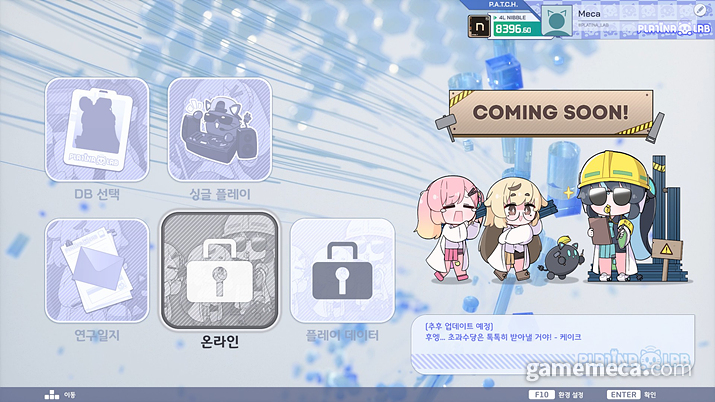
Q. PLATiNA :: LAB's most distinctive feature is its vibrant cast of characters. You've heavily incorporated Live2D technology; what was the background and reasoning behind this choice?
Kim Tae-jun:To briefly explain Live2D, it's a technology that brings static images to life. As I mentioned earlier, growing cute characters is a hallmark of our game. We believed that for players to easily connect with and develop affection for these characters, it was essential for them to be animated. To provide a sense of playing together and interacting with the characters, we directly contacted Live2D headquarters to pursue its implementation.In our early days as a small development team, we considered Spine, another animation technology. However, Live2D was incredibly helpful and supportive in various ways, which ultimately led us to choose them. In retrospect, it was the right decision, as it significantly contributed to the game's overall quality.
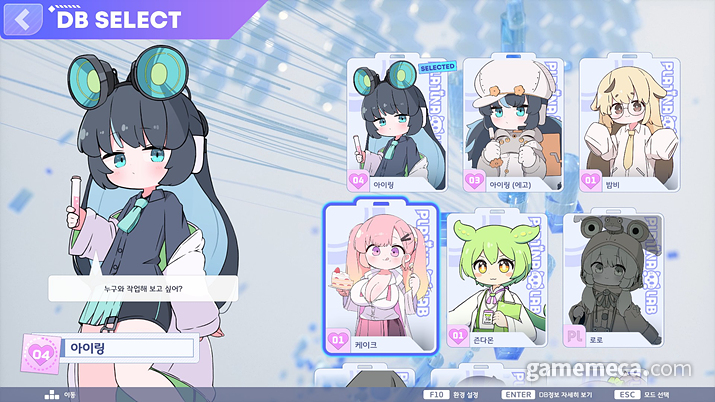
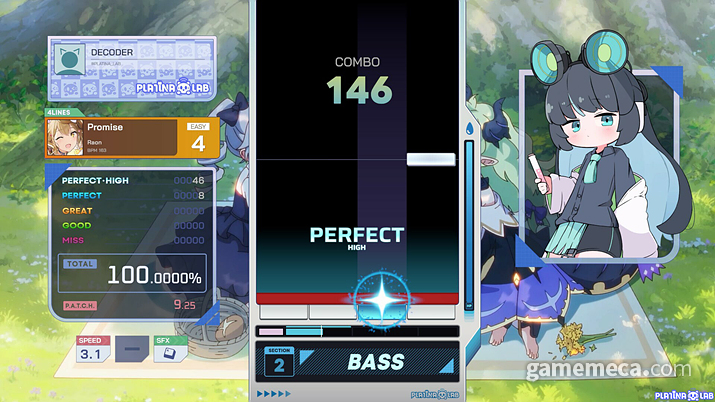
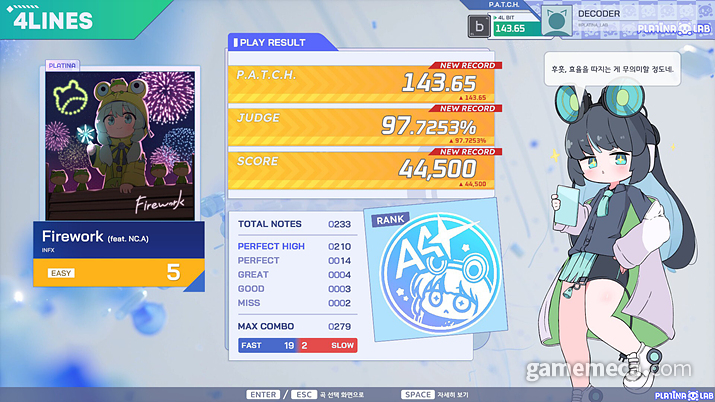
Q. What was the most crucial aspect you focused on when implementing Live2D?
Kim Tae-jun:Our primary focus was ensuring the character movements felt natural. We've often seen other games using Live2D where the character animations still felt somewhat stiff. We were adamant that this aspect would not be compromised. We dedicated the most effort to achieving a natural, seamless visual presentation.While we didn't start by directly mimicking a specific game, we drew inspiration from many subculture titles, like Trickster: Revival. Initially, we debated between LD (Large Display) and SD (Small Display) character styles, but seeing Trickster: Revival convinced us that cute SD characters also had strong potential. I believe this was instrumental in shaping PLATiNA :: LAB into what it is today.
Q. Could you elaborate on the specific advantages Live2D brought to the development process?
Kim Tae-jun:There are several. While utilizing Live2D, we discovered a large pool of freelance artists skilled in related work within the market, and Live2D's headquarters even connected us directly with some of them. We also gained connections with other developers and animators using this technology. Live2D has effectively served as an excellent bridge for music licensing and collaborations.
Q. What has been the user response to the Live2D characters?
Kim Tae-jun:Given the nature of rhythm games, one might assume players are too busy hitting notes to notice the characters. However, highly polished character animations create a definite synergy. We believe Live2D is fulfilling that role. Users are showing a great deal of affection for the characters and are very pleased with the affinity system. This has also led to increased secondary creative activities.
Q. Are there any new endeavors or goals you'd like to pursue with Live2D technology in the future?
Kim Tae-jun:We're envisioning three main directions. Firstly, with support from Live2D headquarters, we'd like to produce professional animated videos for game promotion. Secondly, we plan to significantly enrich and diversify the existing gestures and interactions for each character, moving beyond their current implementations.Finally, in addition to continuous updates for PLATiNA :: LAB itself, we intend to leverage our expertise in Live2D to sequentially develop spin-off games that share the same universe. We will continue to actively utilize Live2D to consistently deliver high-quality content.
2024년 텀블벅 펀딩에서 3일 만에 목표액 800%를 채우며 화제를 모았던 게임이 있다. 바로 하이엔드게임즈에서 만든 ‘플라티나 랩(PLATiNA :: LAB)’이다. 리듬게임 유저들에게 익숙한 건반형 방식에 귀여운 캐릭터를 더했다는 점을 강점으로 내세웠고, 출시 후에도 스팀 유저 평가 ‘매우 긍정적(1,182명 참여, 87%)’을 기록하며 호평받고 있다.
플라티나 랩의 매력은 충실한 게임성도 있지만, 가장 큰 부분은 Live2D(라이브2D)로 생동감을 더한 캐릭터라고 할 수 있다. 특히 정식 출시가 다가오며 추가될 캐릭터와 콘텐츠에 대한 유저들의 기대감도 커지고 있는데, 하이엔드게임즈 김태준 대표를 직접 만나 Live2D를 선택한 이유와 그동안의 성과, 향후 계획 등을 들어봤다.
Q. 가장 먼저 플라티나 랩에 대한 간단한 소개와, 이 게임을 개발하게 된 구체적인 계기가 궁금하다.
김태준 대표: 플라티나 랩은 리듬게임에 캐릭터 수집의 재미를 결합한 게임이다. 귀여운 캐릭터들과 함께 실험을 한다는 콘셉트로 만들어졌다. 리듬게임 장르도 탄생한 지 30여년 정도가 됐는데, 수많은 리듬게임을 경험하면서 나만의 이상향을 찾고자 창업을 결심했다.플라티나 랩은 노트가 위에서 떨어지는 가장 친숙한 구조를 채택했는데, 여기에 다른 게임과 차별화되는 요소가 필요하다고 판단했다. 그래서 단순히 노트를 처리하는 것을 넘어 캐릭터와 상호작용하는 느낌을 가미했다. 귀여운 캐릭터를 성장시키는 재미를 게임 내에 온전히 담아내고 싶었다.
Q. 수록곡이 매우 다양한데, ‘질풍가도’ 같은 추억의 노래부터 보컬로이드 등 서브컬처 팬들이 반가워할 만한 곡도 있다. 이러한 음원을 선정할 때 특별한 기준이 있는지?
김태준 대표: 리듬게임인 만큼 음원 수급에 가장 큰 노력을 기울이고 있다. 다른 리듬게임에는 수록되지 않았으면서도, 대중에게 많은 사랑을 받는 음원을 가져오는 것을 최우선으로 여긴다. 특히 애니메이션이나 인기 게임 수록곡, 그리고 젊은 층이 선호하는 보컬로이드 관련 서브컬처 곡들을 적극적으로 선별하여 타진 중이다.다른 곳에서는 보컬로이드 등 오리지널 곡을 직접 가져오는 경우가 드물지만, 저희는 일본 음원 저작권 협회 자스락(Jasrac)·넥스톤(NexTone)과 계약이 되어 있어 등록된 음원들을 원활하게 가져올 수 있는 시스템을 갖췄다. 리듬게임에서 음악이 차지하는 비중이 절반 이상이라고 생각하기에 유저들이 환영할 만한 악곡을 확보하는 데 집중하고 있다.
Q. 앞서 해보기 출시 후 1년이 지났다. 그동안의 성과에 대해 평가한다면?
김태준 대표: 구체적인 수치를 밝히기는 조심스럽지만, 과거 경험했던 가장 성공적인 리듬게임들과 비교해도 거의 비슷한 수준의 판매량을 기록하고 있다. 유저분들이 보내주신 큰 사랑에 깊이 감사드린다. 현재 가장 큰 과제는 게임을 더 많은 사람에게 알리는 것이라 판단하고 있어서 TGS, 플레이엑스포, AGF 등 오프라인 행사에 꾸준히 참여하고 있다.다가오는 플레이엑스포에서는 Live2D 본사와 합동 부스를 마련해 이전보다 5배 정도 규모를 확장해서 참가한다. 메인 스테이지에서 플라티나 랩을 활용한 대회도 진행할 계획인데, 이러한 오프라인 활동을 통해 게임의 성장 가능성을 보여주고 유저들과 적극적으로 소통하는 데 주력하고 있다.
Q. 개발 과정에서 겪었던 어려운 점이나 특별히 기억에 남는 에피소드가 있는지?
김태준 대표: 어려웠던 점을 먼저 말씀드리면, 개발 도중 예기치 않은 버그들이 생각보다 많이 발생했다. 그중에는 아예 게임의 근간을 바꿔야 하는 경우도 있었다. 다행히 지금은 그러한 기술적 문제들을 대부분 해결하고 안정적인 개발 단계에 돌입했다.반대로 가장 기뻤던 순간은 음원을 수급하는 과정에서 예전부터 동경하던 작곡가들을 직접 만나고 소통할 수 있었던 때다. 오랫동안 좋아했던 작곡가와 실제로 연락이 닿아 협업할 기회가 생겼을 때 소위 말하는 ‘성공한 덕후’가 된 것 같은 큰 희열을 느꼈다. 이러한 점이 개발을 이어가는 강력한 원동력이 되고 있다.
Q. 정식 출시 예정일은 언제인지? 그때 선보일 새로운 주요 콘텐츠는 무엇인지도 궁금하다.
김태준 대표: 올해 8월 정식 출시를 목표로 준비 중이고, 크게 세 가지 주요 콘텐츠를 선보이려 한다. 첫 번째는 경쟁 요소를 강화하기 위해 랭킹 시스템을 전면 개선할 예정이다. 두 번째는 스토리 모드를 순차적으로 공개하려고 하는데, 이번 플레이엑스포에서 해당 모드를 체험할 수 있는 부스를 마련할 계획이다.세 번째는 실시간 대전을 포함한 온라인 모드로, 비공개 베타 테스트를 거쳐 순차적으로 선보일 계획이다. 아울러 정식 출시에 맞춘 오리지널 DLC를 준비 중이며, 여러 타 게임 개발사들과의 긴밀한 협업을 통해 다채로운 음원들을 제공하기 위해 노력하고 있다.
Q. 플라티나 랩의 가장 큰 특징은 생동감 넘치는 다양한 캐릭터다. 특히 Live2D 기술을 적극적으로 도입했는데, 그 배경과 이유는 무엇인가?
김태준 대표: Live2D에 대해 간단히 설명하자면, 정적인 이미지를 생동감 있게 만들어주는 기술이라고 할 수 있다. 앞서 귀여운 캐릭터를 성장시키는 것이 저희 게임의 특징이라고 말씀드렸는데, 유저들이 이 캐릭터와 쉽게 동화되고 애정을 쏟게 만들려면 캐릭터가 살아 움직이는 것이 필수적이라고 판단했다. 캐릭터와 상호작용하며 함께 게임을 즐긴다는 느낌을 주고자 Live2D 본사에 직접 연락해 기술 도입을 추진했다.초기 소규모 개발팀 상황에서 다른 애니메이션 기술인 스파인(Spine)과 고민하기도 했지만, Live2D 측에서 매우 친절하게 대응해 주고 다방면으로 지원을 아끼지 않아 최종적으로 Live2D를 선택하게 되었다. 결과적으로 게임 완성도를 높이는 데 크게 기여했으므로 올바른 선택이었다고 생각한다.
Q. Live2D를 적용하면서 가장 심혈을 기울인 부분이 있다면?
김태준 대표: 가장 중요하게 생각한 것은 캐릭터의 움직임이 자연스러워야 한다는 점이었다. 타 게임들에서도 Live2D를 썼음에도 캐릭터 움직임이 부자연스럽게 느껴지는 경우가 자주 있었는데, 이 부분만큼은 타협할 수 없다고 생각했다. 이질감 없이 자연스러운 모습을 연출하는 데 가장 많은 노력을 기울였다.특정 게임을 모티브로 삼고 기획을 시작한 것은 아니지만, 트릭컬: 리바이브 같은 서브컬처 게임도 많이 참고했다. 처음에는 LD와 SD 중 어느 쪽을 고를지 많이 고민했으나, 트릭컬: 리바이브를 보며 귀여운 SD 캐릭터도 충분히 승산이 있겠다는 확신을 얻었다. 그 덕분에 지금의 플라티나 랩이 만들어진 것이 아닌가 싶다.
Q. 개발 과정에 있어서 Live2D가 준 이점이 무엇이었는지 구체적으로 듣고 싶다?
김태준 대표: 여러 가지가 있지만, Live2D를 활용하면서 관련 외주 작업을 할 수 있는 프리랜서들이 시장에 많다는 것을 알게 됐고 Live2D 본사에서 직접 프리랜서분과 저희를 연결시켜주기도 했다. 또한 이 기술을 사용하는 타 게임 및 애니메이션 개발사들과도 접점이 생겼다. 음원 수급과 협업을 위한 훌륭한 교두보 역할을 Live2D가 해주고 있는 셈이다.
Q. Live2D 캐릭터에 대한 유저들의 반응은 어떤가?
김태준 대표: 리듬게임 특성상 노트 처리에 바빠 캐릭터를 볼 여유가 없다고 생각할 수 있으나, 완성도 높은 캐릭터 애니메이션은 분명한 시너지를 낸다. 이러한 부분을 Live2D가 채워주고 있다고 생각한다. 실제로 유저들이 캐릭터에 많은 애정을 쏟아주고 계시고, 호감도 시스템에도 크게 만족하고 계신다. 이를 바탕으로 한 2차 창작 활동도 활발해지고 있다.
Q. 향후 Live2D 기술을 활용해 새롭게 시도해 보고 싶은 작업이나 목표가 있다면?
김태준 대표: 크게 세 가지 방향을 구상하고 있다. 첫째, Live2D 본사의 지원을 바탕으로 게임 홍보 등에 쓰일 전문적인 애니메이션 영상을 제작해 보고 싶다. 둘째, 현재 게임 내 캐릭터별로 구현된 제스처나 상호작용을 앞으로 훨씬 더 풍성하고 다양하게 확대해 나갈 계획이다.마지막으로 플라티나 랩 본편의 지속적인 업데이트뿐만 아니라, Live2D 기술을 전문적으로 다루는 강점을 살려 해당 세계관을 공유하는 스핀오프 게임들도 차례로 개발할 예정이다. 앞으로도 Live2D를 적극 활용해 고품질 콘텐츠를 꾸준히 선보이겠다.
This news was translated by AI.

I will greet you with a good article. niro201@gamemeca.com

RECOMMENDED NEWS
MOST POPULAR NEWS
- [gamescom 26] An RPG set in the US dominated by Japanese culture is coming
- Hyper Boost and Level Revamp, Black Desert Second Half Roadmap Revealed
- 2026 LCK Round 3 Kicks Off with T1 vs. KT Telecom Derby
- Bethesda Accused of Repeated Labor Law Violations During Restructuring Process
- Season 3 with 60 Champions, League of Legends Classic Released
- Gen.G is different in Stage 2, first to reach 3 wins in VCT Pacific
- Infiltration and a Powerful One-Shot, Black Desert Announces New Class 'Agent'
- Greatsword-wielding dinosaur soulslike DinoBlade receives 'Very Positive' Steam rating
- Krafton Q2 2026 Operating Profit Hits 410.9 Billion KRW, Up 67% Year-on-Year
- [LOL Meme] KeSPA Cup schedule change leads to tighter calendar for top teams
MEDIA PARTNERSHIPS



GAMEMECA SNS