If you've experienced hacking as a Netrunner while traversing Night City as V in Cyberpunk 2077, you might find it interesting that a game that brought that world to the table existed before it. The game in question is 'Netrunner,' designed by Richard Garfield, the creator of Magic: The Gathering, in 1996. While critically acclaimed, it unfortunately faded into obscurity commercially. Fantasy Flight Games later re-released it in 2012 under the name 'Android: Netrunner,' capturing the attention of many board gamers. This review covers the core set of this FFG version.
Gamemeca runs a monthly column called [Board Games], where we introduce great board games alongside CEO Uchi of board game developer Popuri.
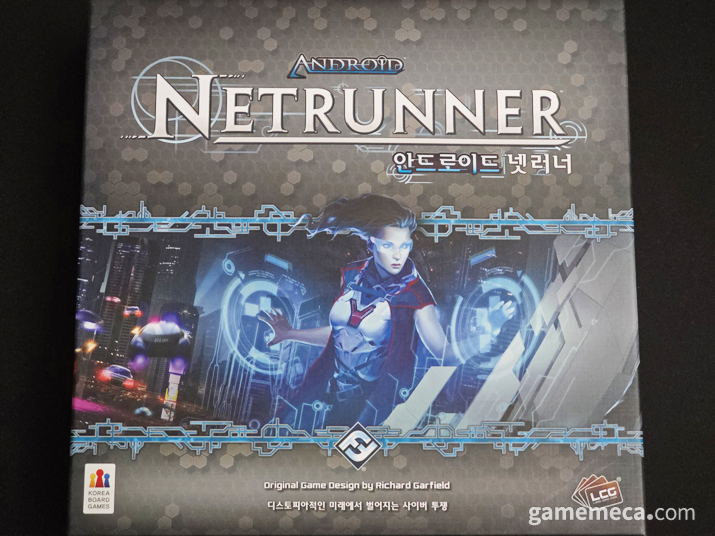
▲ Android: Netrunner core set package (Photo: Gamemeca)
If you've experienced navigating Night City as V in Cyberpunk 2077 and hacking your way through as a Netrunner, you might find it intriguing that a game existed prior, bringing that very world to your tabletop. That game is 'Netrunner,' designed by Richard Garfield, the creator of Magic: The Gathering, back in 1996.
While critically acclaimed, it sadly never achieved commercial success and faded away. However, Fantasy Flight Games (FFG) revived it in 2012 under the name 'Android: Netrunner,' capturing the attention of many board gamers. This review focuses on the FFG version's core set.
Cyberpunk vibes on a single card
The core set's basic components are rather sparse: a deck of cards, credit tokens, and various counters. There are no flashy extras like miniatures or a large game board. So, upon opening the box, it might feel a bit underwhelming.
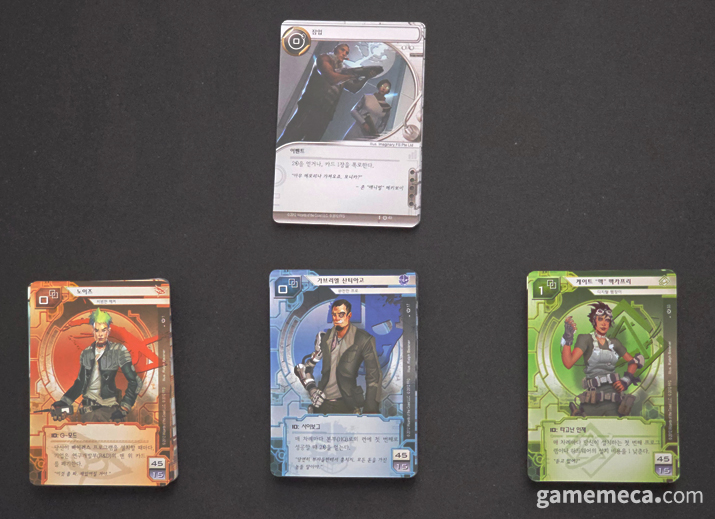
▲ The hacker, Runner, and three Runner factions plus neutral cards (Photo: Gamemeca)
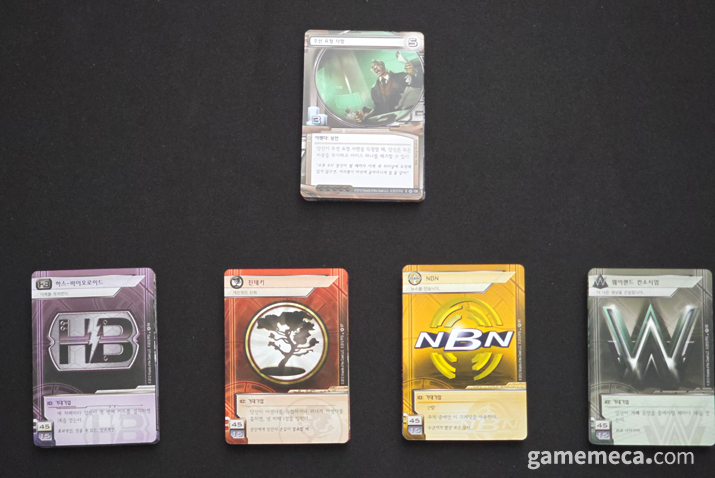
▲ Four Corp faction cards and neutral cards (Photo: Gamemeca)
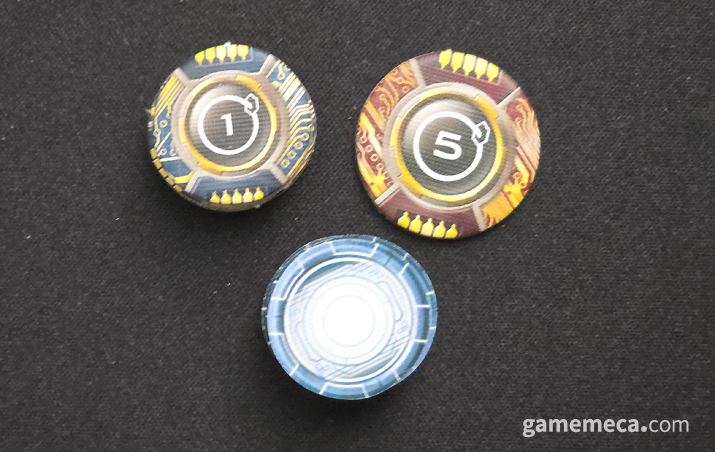
▲ Credit tokens, which serve as currency; flipping a 1-credit token reveals it can be used as an advancement token (Photo: Gamemeca)
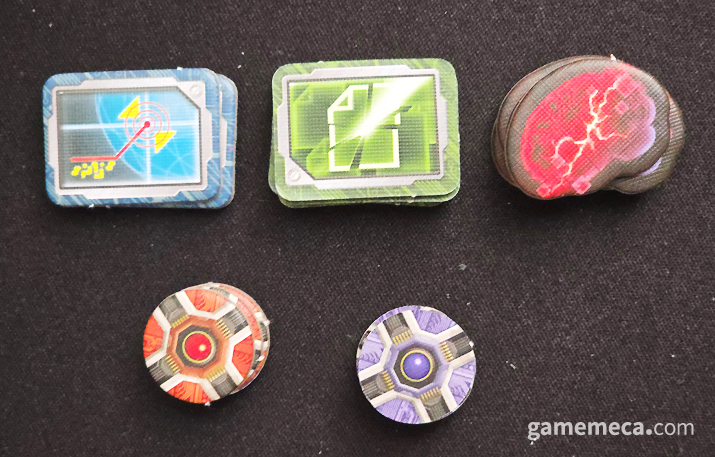
▲ From top left: Tag tokens, Bad Publicity tokens, Brain Damage tokens indicating continuous damage to the Runner, and counter tokens used to track various stats for both Corp and Runner (Photo: Gamemeca)
However, the story changes when you examine the cards one by one. Each Ice card, Agenda card, and Event card is steeped in cyberpunk atmosphere. The harsh image of megacorporations and the feel of hackers exploiting their weaknesses are vividly conveyed through the card artwork alone. It's impressive how, without elaborate components, simply holding the cards makes you feel immersed in the world.
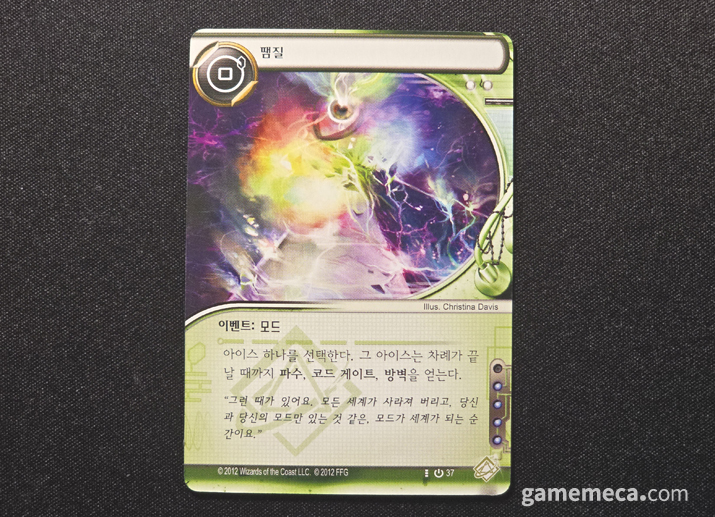
▲ An event card breaking through an Ice (firewall). Cards depicting ice in the game sometimes evoke a sense of looking into the cosmos (Photo: Gamemeca)
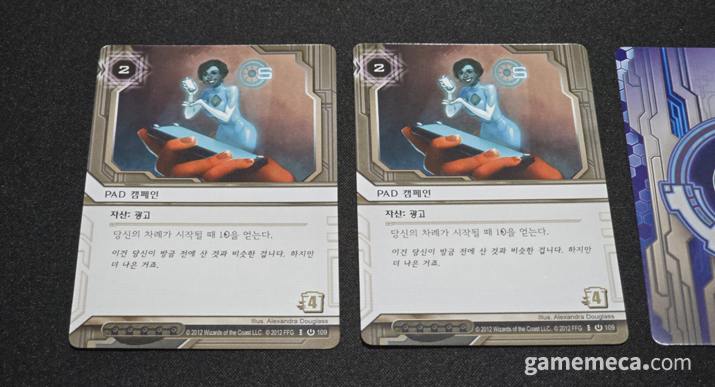
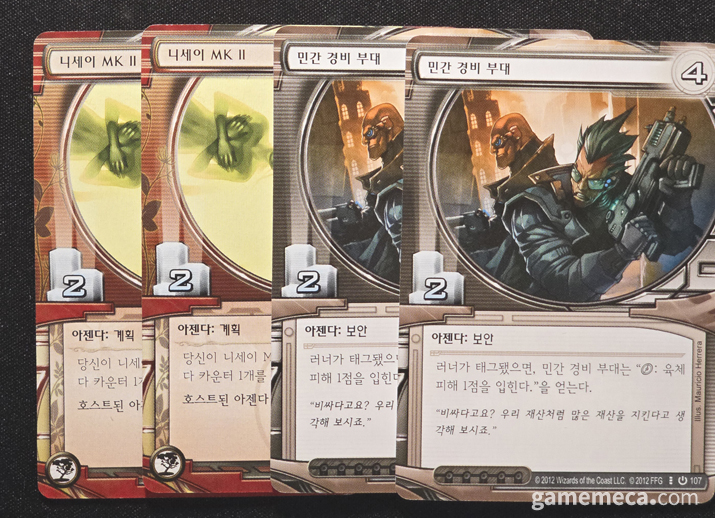
▲ Corporation-specific cards, reminiscent of the billboards seen in Cyberpunk 2077 (Photo: Gamemeca)
A high-stakes psychological battle between Corp and Runner over Agendas
The most distinctive feature of Android: Netrunner is that the two players engage in the game in entirely different ways. One player assumes the role of a megacorporation, while the other plays as the hacker, the Runner. It's akin to one person playing as Arasaka and the other as V from Cyberpunk 2077.
The Corp's objective is to develop its Agendas (victory point cards) while preventing them from being exposed to the outside world. Conversely, the Runner must hack into the Corp's hidden Agendas and steal them. Both sides win by reaching 7 Agenda points first. The Corp scores points by advancing Agendas, and the Runner scores by stealing those Agendas.
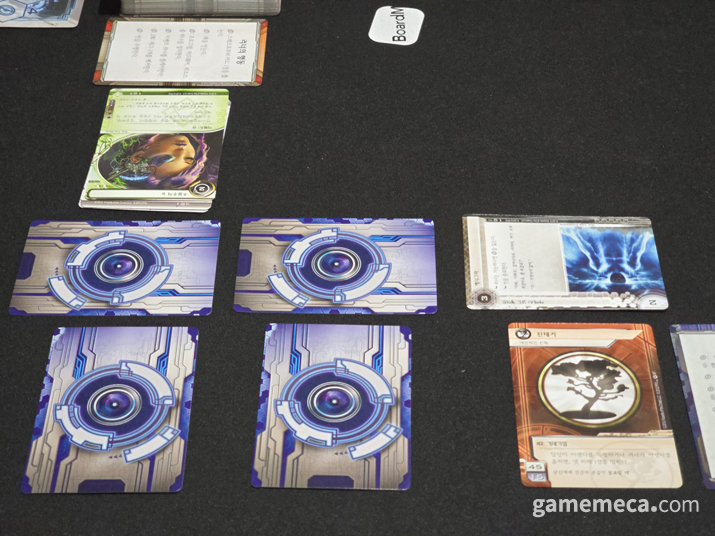
▲ The Corp can place assets or Agendas on remote servers and advance them; cards laid horizontally signify installed Ice protecting the server (Photo: Gamemeca)
In addition to its main HQ server, the Corp can establish multiple remote servers. Through these servers, it can secretly install and advance Agenda and asset cards. The key element here is ICE (Intrusion Countermeasures Electronics). ICE functions like a digital firewall, installed by the Corp in front of servers to block the Runner's intrusion.
The Runner uses hacking tools called Breakers to overcome this ICE. Since different Breakers are required to neutralise each type of ICE, deciding which Breakers to prepare is the Runner's core strategy.
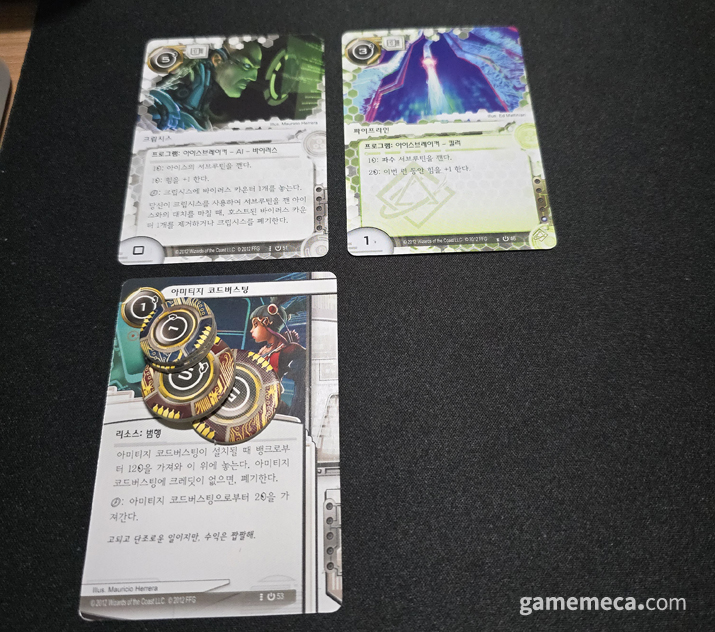
▲ The Runner must utilise hacking programs or various resource cards to break through the Corp's installed ICE; once installed, they remain usable unless removed by the Corp (Photo: Gamemeca)
This is where the game's nuance shines. The cards the Corp installs on its servers can be Agendas or assets. Some assets are traps, designed to inflict damage on the Runner the moment they successfully hack and reveal the card. For the Corp, laying traps and waiting for the Runner to fall for them is a valid strategy.
Conversely, the Runner must decide whether to 'run' by assessing whether a card installed by the Corp is an Agenda or a trap. This psychological warfare is the heart of Android: Netrunner's fun.
Tense gameplay for both Corp and Runner
I've played as both the Corp and the Runner, and while the fun derived from each role is different, the tension is equally high on both sides.
When playing as the Runner, the most striking moment was attempting a run on the Corp's HQ server (the Corp player's hand). I broke through the ICE one by one with my Breakers, and upon revealing the card in hand, it turned out to be a trap, not an Agenda. While it could be disheartening, it made me even more eager for the next run. The thought, 'There's definitely a real Agenda this time,' kept nagging at me. The uncertainty of what lies hidden on that server becomes the driving force, compelling you to keep attempting runs.
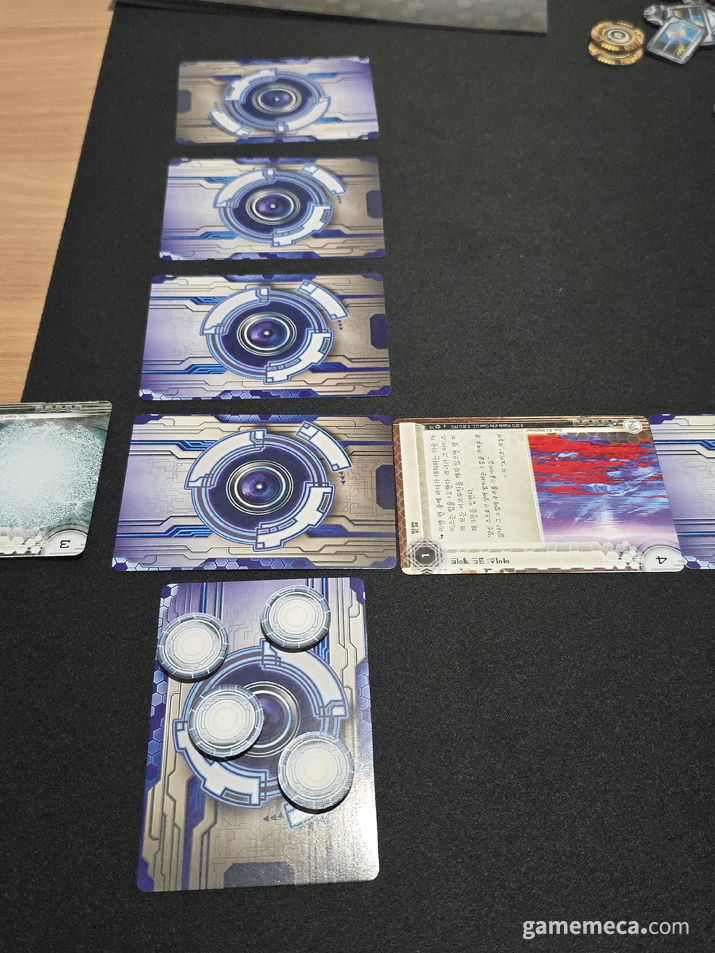
▲ Corp-installed ICE cards; could that advancement token represent an Agenda card? (Photo: Gamemeca)
▲ Agendas collected by the Runner; with 8 points, the game concluded (Photo: Gamemeca)
Playing as the Corp offered a different kind of tension. While installing ICE across multiple servers is fundamental to defence, activating (rezzing) ICE requires credits. The moment the Runner infiltrated an unexpected server, I lacked the credits to rez the ICE and could only watch. To make matters worse, the cards drawn from the HQ deck were consecutively Agendas, leading to consecutive points for the Runner. It was a moment where I became complacent with a wide defensive net, only to fail in resource management.
If you ask me which side is more fun, Corp or Runner, it's a difficult question. The Runner has the thrill of diving into the unknown, while the Corp experiences the heart-stopping dread of seeing a meticulously constructed defence crumble unexpectedly. The fact that two people have completely different experiences with the same game is, I believe, Android: Netrunner's greatest appeal.
A game that lives on despite official discontinuation
Android: Netrunner was officially discontinued in 2018 when FFG lost the license. The Korean core set is also out of print and hard to find, and the situation is similar overseas.
However, the game itself hasn't vanished. A non-profit fan organisation called Null Signal Games (NSG) has taken over the game and continues to release new expansions. They provide free PDF versions for players to print and play, and the use of proxy cards is legal in all official tournaments, including the World Championship. In essence, the barrier to entry is virtually non-existent.
The situation in Korea is a bit different, though. With the Korean core set out of print and no active community to speak of, finding an actual opponent to play with is a significant challenge.
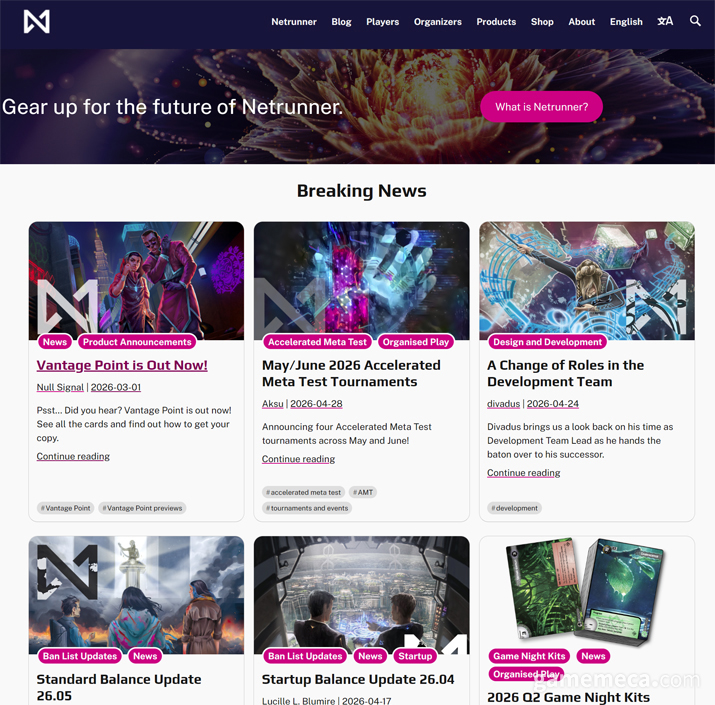
▲ The official Null Signal Games website, which continues to release the discontinued Netrunner game under the name System Gateway (Source: Null Signal Games Official Website)
Cyberpunk world and hacking perfectly intertwined
Android: Netrunner has a steep learning curve. The rulebook contains terminology rarely found in other board games, and understanding the effect of each card adds to the initial learning burden. The practical difficulty of finding players also remains.
Despite these hurdles, this game is special. The process of installing ICE directly in front of the server and the Runner breaking through each layer with Breakers to infiltrate powerfully recreates the feeling of actual hacking and defence. The unique terminology used only in Netrunner, initially unfamiliar, enhances immersion in the world once you become accustomed to it. Games where the theme and rules align so perfectly are rare.
For players interested in the Cyberpunk universe and who enjoy asymmetric psychological combat, this is a thoroughly captivating game. If you're intrigued, printing out the PDF version released by Null Signal Games and giving it a try is a worthwhile option.
Uchi
An ordinary board game developer.
I serve as the CEO of the board game company 'Popuri.'
게임메카는 한 달에 한 번 보드게임 개발사 포푸리의 우치 대표와 함께 좋은 보드게임을 소개하는 코너 [보드게임]을 연재합니다.
▲ 안드로이드 넷러너 코어 세트 패키지 (사진: 게임메카 촬영)
사이버펑크 2077 속 V로 나이트 시티를 누비며 넷러너로 해킹해 본 경험이 있다면, 그보다 먼저 그 세계관을 테이블 위에 구현한 게임이 있다는 사실이 흥미롭게 느껴질 것입니다. 매직 더 개더링을 만든 리처드 가필드가 1996년에 디자인한 '넷러너'가 바로 그 주인공입니다.
이 게임은 비평적으로는 극찬을 받았지만, 아쉽게도 상업적으로는 빛을 보지 못하고 사라졌는데요. 이후 판타지 플라이트 게임즈(FFG)가 2012년에 '안드로이드 넷러너'라는 이름으로 재출시하며 많은 보드게이머들의 시선을 집중시켰습니다. 이번 리뷰에서 다루는 건 바로 이 FFG 버전의 코어 세트입니다.
카드 한 장에 느껴지는 사이버펑크 느낌
코어 세트 기본판 구성은 단출한 편입니다. 카드 덱, 크레딧 토큰, 각종 카운터류가 전부로, 피규어나 대형 보드판 같은 화려한 구성품은 없습니다. 그래서 처음 박스를 열면 다소 밋밋하게 느껴질 수 있죠.
▲ 해커인 러너, 세 개의 러너 세력과 중립 카드 (사진: 게임메카 촬영)
▲ 네 개의 기업 세력 카드와 중립 카드 (사진: 게임메카 촬영)
▲ 화폐 역할을 하는 크레딧 토큰, 1 크레딧 토큰을 뒤집으면 발전 토큰으로 사용할 수 있다 (사진: 게임메카 촬영)
▲ 왼쪽 위부터 태그 토큰, 악평 토큰, 러너의 지속적 피해를 표시하는 두뇌 피해 토큰, 기업과 러너의 몇몇 수치를 표시하는 데 사용하는 카운터 토큰 (사진: 게임메카 촬영)
하지만 카드를 한 장씩 살펴보면 이야기가 달라집니다. 아이스 카드, 아젠다 카드, 이벤트 카드 하나하나에 사이버펑크 분위기가 세세히 담겨 있습니다. 거대 기업의 냉혹한 이미지와 그 틈새를 파고드는 해커의 느낌이 카드 아트워크만으로도 충분히 전달됩니다. 화려한 구성품 없이도 카드를 손에 쥐는 순간부터 세계관 안에 들어온 듯한 느낌을 받을 수 있다는 점이 인상적이었습니다.
▲ 아이스(방화벽)를 깨는 이벤트 카드. 게임 내에서 아이스를 그리는 카드는 때로는 우주를 보는 듯 하다 (사진: 게임메카 촬영)
▲ 기업용 카드, 사이버펑크 2077에서 보던 광고판이 떠오른다 (사진: 게임메카 촬영)
아젠다를 둘러싼 기업과 해커 간 고도의 심리전
안드로이드 넷러너의 가장 큰 특징은 두 플레이어가 완전히 다른 방식으로 게임을 한다는 점입니다. 한 명은 거대 기업을, 다른 한 명은 해커인 러너를 맡습니다. 사이버펑크 2077로 치면 아라사카와 V를 각각 한 명씩 나눠서 플레이하는 셈이죠.
기업의 목표는 자신의 아젠다(승점 카드)가 외부 세계에 공개되지 않도록 보호하며 발전시키는 것입니다. 러너는 반대로 기업이 숨겨둔 아젠다를 해킹을 통해 탈취해야 합니다. 양측 모두 아젠다 점수 7점을 먼저 채우면 승리합니다. 기업은 아젠다를 발전시켜 점수를 올리고, 러너는 그 아젠다를 빼앗아 자신의 점수로 만드는 구조라 할 수 있습니다.
▲ 기업은 원격 서버에 자산이나 아젠다를 넣어두고 발전시킬 수 있다, 가로로 놓은 카드는 서버를 방어할 수 있는 아이스를 깔아놓은 걸 의미한다 (사진: 게임메카 촬영)
기업은 본부 서버 외에도 여러 외부 서버를 구성할 수 있으며, 이 서버를 통해 아젠다와 자산 카드를 비공개 상태로 설치해 발전시켜 나갑니다. 이때 핵심이 되는 것이 바로 아이스(ICE)입니다. 아이스는 현실의 방화벽과 같은 개념으로, 기업이 서버 앞에 설치해 러너의 침입을 막는 방어 수단입니다.
러너는 이 아이스를 뚫기 위해 브레이커라는 해킹 툴을 사용합니다. 아이스 종류마다 이를 무력화하는 브레이커가 다르기 때문에, 어떤 브레이커를 준비하느냐가 러너의 핵심 전략이 됩니다.
▲ 러너는 기업이 깔아놓은 아이스를 깨기 위해서 해킹 프로그램이나 여러 리소스 카드를 활용해야만 한다, 한번 설치해두면 기업이 제거하지 않는 한 계속 쓸 수 있다 (사진: 게임메카 촬영)
여기서 묘미가 생깁니다. 기업이 서버에 설치하는 카드는 아젠다일 수도 있고, 자산일 수도 있습니다. 자산 중에는 함정 역할을 하는 카드도 있어, 러너가 해킹에 성공해 카드를 뒤집는 순간 오히려 피해를 입는 상황이 벌어지기도 합니다. 기업 입장에서는 함정을 심어두고 러너가 걸려들기를 기다리는 것도 전략이라 할 수 있죠.
반대로 러너 입장에서는 기업이 설치한 카드가 아젠다인지 함정인지를 판단하며 런을 결정해야 합니다. 이 심리전이 안드로이드 넷러너의 핵심 재미입니다.
기업과 러너 모두 긴장감 넘치는 플레이
저는 기업과 러너를 번갈아 플레이해봤습니다. 양쪽을 모두 경험해보니 재미의 결이 달랐지만, 긴장감만큼은 어느 쪽도 떨어지지 않았습니다.
러너를 맡았을 때 가장 인상적인 부분은 기업 본부 서버(기업 플레이어의 손)에 런을 시도했을 때였습니다. 아이스를 브레이커로 하나씩 뚫고 들어가 손에 쥔 카드를 공개하는 순간, 아젠다가 아니라 함정 카드가 나왔습니다. 허탈할 법도 한데 오히려 다음 런이 더 하고 싶어졌습니다. '이번엔 진짜 아젠다가 있을 것 같다'는 생각이 자꾸 드는 것이죠. 저 서버에 뭐가 숨어있는지 알 수 없다는 불확실성이 오히려 계속 런을 결정하게 하는 동력이 됩니다.
▲ 기업이 깔아놓은 아이스 카드, 저 발전 토큰은 과연 아젠다 카드일까 (사진: 게임메카 촬영)
▲ 러너가 수집한 아젠다 카드, 8점이 되어서 게임이 끝났다 (사진: 게임메카 촬영)
기업을 맡았을 때는 또 다른 긴장감을 맛볼 수 있었습니다. 아이스를 여러 서버에 촘촘하게 깔아두는 것이 방어의 기본이지만, 아이스를 활성화(레즈)하려면 크레딧이 필요합니다. 러너가 예상치 못한 서버로 침투해 들어오는 순간, 아이스를 레즈할 크레딧이 부족해 그냥 지켜볼 수밖에 없었습니다. 설상가상으로 본부 덱에서 뽑히는 카드가 연속으로 아젠다였고, 러너에게 연달아 점수를 내주고 말았죠. 방어망을 넓게 펼쳤다고 안심했다가 자원 관리에 실패한 순간이었습니다.
러너와 기업 중 어느 쪽이 더 재밌냐고 묻는다면 대답하기 어렵습니다. 러너는 모르는 채로 뛰어드는 짜릿함이 있고, 기업은 촘촘하게 방어망을 구성하다가 예상치 못한 곳에서 무너지는 아찔함이 있습니다. 같은 게임인데 두 사람이 완전히 다른 경험을 한다는 것, 그게 안드로이드 넷러너의 가장 큰 매력이라는 생각이 들었습니다.
공식 절판에도 죽지 않은 게임
안드로이드 넷러너는 2018년 FFG가 라이선스를 잃으면서 공식적으로 생산이 종료됐습니다. 한국어판 코어 세트 역시 품절 상태로 구하기 쉽지 않고, 해외도 사정은 다르지 않습니다.
하지만 게임 자체는 완전히 사라지지 않았습니다. 널 시그널 게임즈(NSG)라는 비영리 팬 조직이 게임을 이어받아 현재도 새로운 확장판을 출시하고 있습니다. 무료 PDF를 공개해 직접 출력해 플레이할 수 있으며, 세계선수권을 포함한 모든 공식 대회에서 프록시 카드 사용이 합법입니다. 사실상 진입 비용이 거의 없는 셈이죠.
다만 국내 상황은 조금 다릅니다. 한국어판 코어 세트가 품절된 데다 활성화된 커뮤니티를 찾기 어려워, 실제로 함께 플레이할 상대를 구하는 것 자체가 쉽지 않은 게 현실입니다.
▲ 널 시그널 게임즈 공식 홈페이지, 절판된 넷러너 게임을 시스템 게이트 라는 이름으로 계속 내놓고 있다 (자료출처: 널 시그널 게임즈 공식 홈페이지)
사이버펑크 세계관과 해킹이 완벽히 맞물린다
안드로이드 넷러너는 진입장벽이 낮지 않습니다. 룰북에는 다른 보드게임에서 쉽게 볼 수 없는 용어가 많고, 카드 하나하나의 효과를 파악해야 한다는 점도 초반 학습 부담을 높입니다. 함께할 플레이어를 구하기도 쉽지 않다는 현실적인 문제도 있습니다.
그럼에도 이 게임은 특별합니다. 아이스를 직접 서버 앞에 깔아두고, 러너가 브레이커로 하나씩 뚫으며 침투하는 과정이 실제 해킹과 방어의 느낌을 강하게 재현하기 때문입니다. 넷러너에서만 쓰이는 독자적인 용어도 처음엔 낯설지만, 익숙해지면 오히려 세계관에 대한 몰입감을 높입니다. 테마와 게임 룰이 이렇게 잘 맞아떨어지는 게임은 보기 드뭅니다.
사이버펑크 세계관에 관심이 있고, 비대칭 구조의 심리전을 즐길 수 있는 플레이어라면 충분히 매력적인 게임입니다. 만약 흥미가 생겼다면 널 시그널 게임즈에서 공개한 PDF 버전을 출력해 플레이해보는 것도 나쁘지 않은 선택입니다.


 [FigureMeca] That day, gamers remembered. Attack on Titan...
 [precedent.zip] Even if the original owner reclaims the account after a transaction, protection is difficult
 [Board Game] Translation is the flaw in the gem, The Elder Scrolls: Betrayer of the Second Era
 Major Game Company Acquisitions: The Top 10 News of the First Half of 2026