
Why Did 'Song of the Unsung' Decide on a Bold Collaboration with 'Genesis of the Era'?
미송자의 노래, 창세기전과 파격 컬래버 결정한 이유는?
2026.05.28 17:11 UTC+9
AI Summary
Recently, the most notable genre in the mobile game market is none other than 'idle RPGs'. Thanks to the advantage of being easy to enjoy amidst a busy daily life, the idle market can be called a true red ocean with numerous titles pouring out. Amidst this, 'Song of the Unsung', an idle RPG officially released in February, has firmly established itself in the market. It garnered high expectations by recording 1 million pre-registrations even before its launch, and after its release, it received positive reviews for various aspects such as its pixel graphics reminiscent of classic RPGs, its OST, and its low barrier to entry.
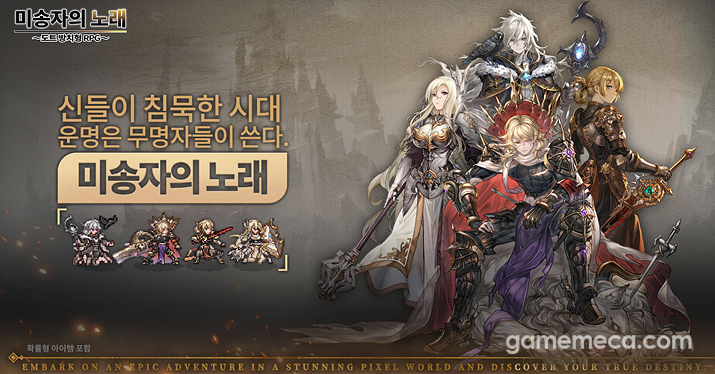
The mobile gaming market has recently seen a surge in popularity for 'idle RPGs.' Their appeal lies in being easy to enjoy amidst busy schedules, a factor that has led to widespread acclaim. However, this has also resulted in a saturated market, with a deluge of titles vying for attention.
Amidst this crowded landscape, 'Song of Unsung Heroes,' officially launched in February, has managed to carve out its niche. Pre-launch, it garnered an impressive 1 million pre-registrations, building considerable anticipation. Post-launch, it has been lauded for its nostalgic pixel graphics reminiscent of classic RPGs, its evocative OST, and its accessible gameplay. The upcoming Genesis Chronicles collaboration, kicking off on the 28th, is poised to reignite interest, and we sat down with the developers at Lightcore Games to discuss their initial vision, design philosophy, and the behind-the-scenes story of this exciting collaboration.
Q. One of the distinctive features of 'Song of Unsung Heroes' is its use of Norse mythology as a motif, focusing on ordinary individuals rather than traditional heroes. Could you elaborate on the reasoning behind this choice?
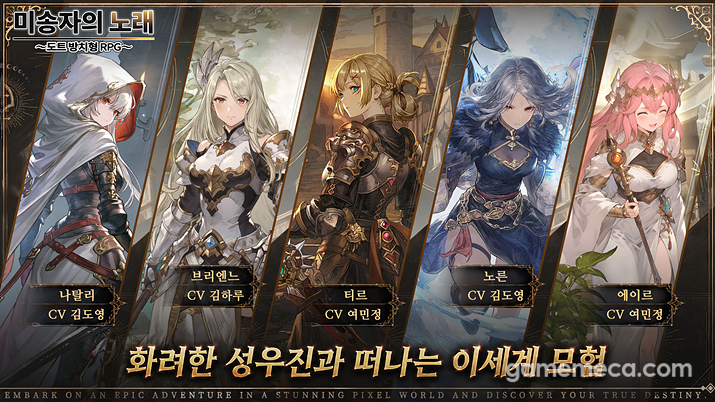
Our starting point was the belief that it's the ordinary people, those whose names are never recorded, who truly drive history forward. We felt that the power to set a faltering world in motion again, even as the gods remain silent, comes from them. Instead of choosing the path of the 'chosen hero,' we decided to spotlight characters like a shepherdess or a wandering swordsman.They may not have destined glory, but they press on to protect what they hold dear. 'Unsung Heroes' represents those yet to be remembered by the world, and we wanted players to experience the journey of nurturing these characters and forging their own legends.
Q. The idle game market is currently extremely saturated. What do you believe has been the driving force behind 'Song of Unsung Heroes' successfully establishing itself in this environment?
Our core design philosophy revolves around low commitment and high feedback. We aimed to ensure that even players who engage for short periods each day would clearly feel their progress. Simultaneously, we wanted to provide ample strategic depth for those who wish to delve deeper. Rather than fixating on increasing playtime, our focus was on delivering tangible fun and growth feedback within limited engagement.
Q. Balancing the strategic elements with the inherent convenience of idle games must have been a significant challenge.
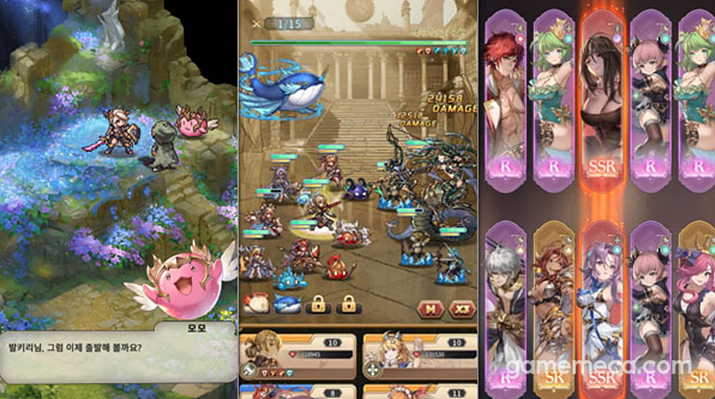
We meticulously separated the burden of manual control from the enjoyment of strategic decision-making. Specifically, while avoiding the need for prolonged manual operation or constant logins, we ensured that party composition offered substantial strategic depth. The interplay of the four classes and six elements significantly impacts the party's rhythm, and even with the same party, the order of skill activation can dramatically alter the battle's outcome. To mitigate any sense of fatigue in this process, we implemented a level and equipment sharing system, allowing players to experiment with various combinations without the burden of extensive individual character progression.
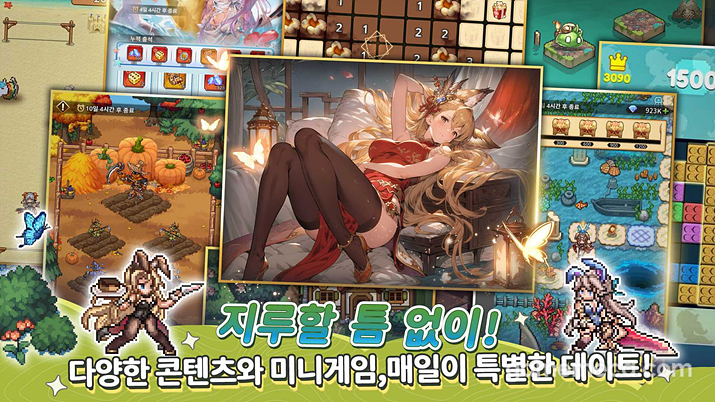
Q. Beyond the core combat, the inclusion of various mini-games like mining, tile-matching, and Minesweeper was quite striking. Was there a particular intention behind incorporating such a variety of sub-content?
We wanted to recreate the nostalgic experience of the golden age of console RPGs, where players might momentarily forget the main story while engrossed in mini-games. These serve to punctuate the main growth loop with moments of lighthearted enjoyment, shifting the player's rhythm. Given the positive player reception, we plan to introduce more such light mini-games to offer alternatives to repetitive combat.
Q. Idle games are known for their rapid content consumption. What kind of end-game content are you preparing for your top-tier players?
From the early stages of development, we considered a progression structure for long-term players. Currently, 'Trials of the Gods,' 'Tower of Ascension,' and 'Guild Wars' serve as our end-game content. 'Trials of the Gods,' in particular, requires simultaneous progression of multiple characters and strategic adjustments to boss patterns, making party composition and skill synergy far more critical than raw stats.We intend to continue adding long-term growth objectives, special mechanics that necessitate ongoing research rather than simple stat competition, and challenging bosses. Our aim is to ensure that high-level players can consistently experience the satisfaction of overcoming limits and experimenting with party compositions well into the later stages of the game.
Q. 'Song of Unsung Heroes' was initially released in Japan last year. Were there noticeable differences in playstyle between Japanese and Korean users?
Absolutely. Japanese players tend to prefer a relaxed tempo that seamlessly integrates into their daily lives, enjoying a gradual, consistent accumulation of progress. Korean players, on the other hand, are considerably more proactive and exhibit a stronger inclination towards system analysis.In particular, Korean users have shown a tendency to deeply analyze party compositions, class matchups, and leveling efficiency right from the start. Features like the automatic battle unlock at level 50, which Japanese players accepted naturally, were met with demands for immediate unlocking by Korean users on day one. Their interest in character performance evaluations and high-difficulty content is also significantly higher.Of course, the detailed feedback from Japanese players has also greatly contributed to the game's development. We actively incorporated their suggestions for enhancing character animations and voice acting, leading to a substantial improvement in voice acting and overall presentation quality in the Korean release version, thereby deepening player immersion.
Q. The 'Genesis Chronicles' collaboration is set to begin on the 28th. With so many potential IPs, what led to the decision to collaborate with Genesis Chronicles?
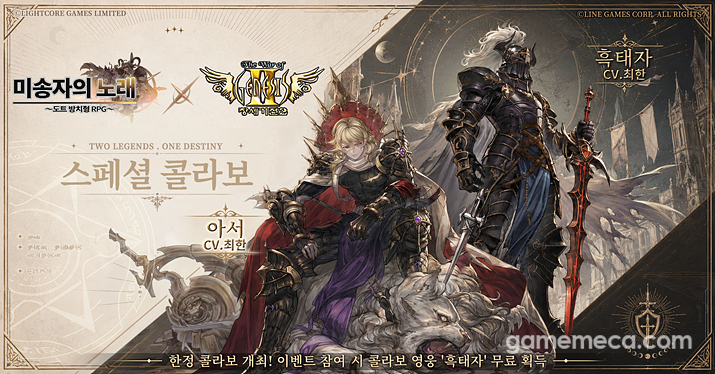
Many within our development team are fans of Genesis Chronicles' music and the story of Heuktaeja. Genesis Chronicles stands as an unassailable monument in the history of Korean PC RPGs. As 'Song of Unsung Heroes' itself draws significant inspiration from the sensibilities of classic PC RPGs, we felt a strong compatibility between the two titles in terms of world-building and character atmosphere.Furthermore, we prioritized the ability for players to evoke emotions and memories upon seeing the characters over mere IP recognition. Heuktaeja's tragic fate and his dignified, yet cold and warm, composure as a victor align remarkably well with the epic narrative tone of 'Song of Unsung Heroes,' which centers on ordinary individuals upholding the world.
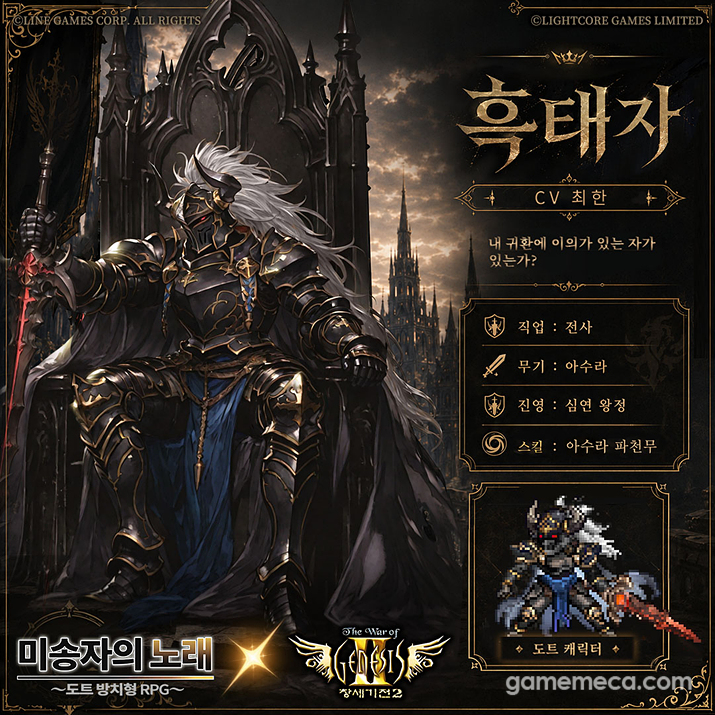
Q. The highlight of this collaboration is the new SSR character, 'Heuktaeja.' What were the key considerations during the process of reinterpreting Heuktaeja for 'Song of Unsung Heroes'?
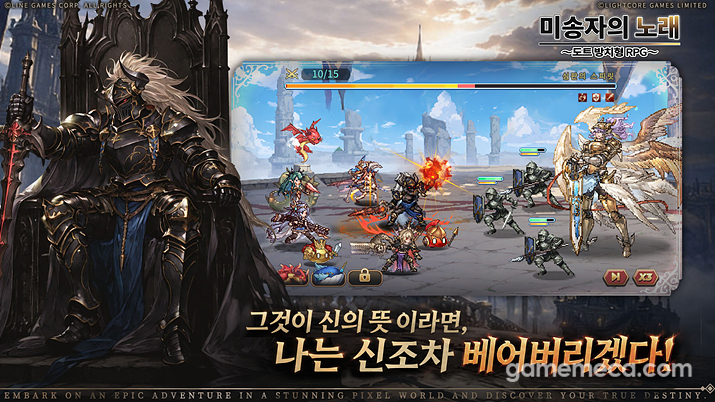
Genesis Chronicles 2, the original game, had somewhat limited pixel representation due to the technological constraints of its era. When adapting Heuktaeja for 'Song of Unsung Heroes,' our focus wasn't merely on increasing resolution but on re-envisioning him within the rhythmic framework of modern pixel action. We meticulously fine-tuned Heuktaeja's overwhelming presence, the weight behind his sword swings, and the rhythm of his combat movements. Naturally, his signature skill animations were designed to preserve the essence of the original work.Conversely, we deliberately avoided overly flashy visual effects, reflecting Heuktaeja's reserved emotional expression in the presentation. Instead, we conveyed his composure and gravitas as a ruler through a colossal lava eruption and a single, impactful cleave. We believe players will immediately recognize the Heuktaeja from the original game when they see his skills.
Q. Are there any plans for introducing more Genesis Chronicles characters or collaborating with other IPs in the future?
We often discuss internally how characters like Cyrano or Ioline might fit into the game's world. However, our current focus is on perfecting Heuktaeja's implementation. As we are dealing with a beloved classic IP, we are approaching every step with utmost care to meet the expectations of its fans.Should the player response to this collaboration be positive, we will actively explore the possibility of further collaborations. We are keenly discussing not only other heroes from Genesis Chronicles but also potential partnerships with various titles that embody that classic RPG sensibility. Our core objective is to evoke those cherished RPG emotions from past generations in today's players.
Q. How do you hope 'Song of Unsung Heroes' will be remembered by Korean players, and do you have any final words for them?
We hope it will be remembered as a game that players naturally feel drawn back to, even with only brief play sessions each day. While it may not be the fastest or most stimulating game, we aspire for it to be a warm experience that allows players to forge emotional connections by feeling the progression and adventure of their characters amidst their busy lives.Engaging with Korean players, who possess a deep RPG culture and a serious approach to system analysis, has been a meaningful challenge for our team. We will continue to listen to the passionate feedback pouring in since the game's launch and diligently improve the environment. We sincerely hope that all players will forge their own wonderful adventures and memories within the game.
최근 모바일게임 시장에서 가장 주목받고 있는 장르는 다름 아닌 ‘방치형 RPG’다. 바쁜 일상 속에서 가볍게 즐기기 좋다는 장점 덕분에 많은 인기를 얻고 있지만, 그만큼 수많은 작품이 쏟아지며 최근 방치형 시장은 레드오션이 됐다고 할 수 있다.
그러한 가운데 지난 2월 정식 출시된 방치형 RPG ‘미송자의 노래’는 당당히 시장에 안착했다. 출시 전부터 사전예약자 100만 명을 기록하며 큰 기대를 모았고, 이후에도 고전 RPG의 향수를 떠올리는 픽셀 그래픽과 OST, 낮은 진입 장벽 등 다양한 측면에서 호평받았다. 특히 28일 시작되는 창세기전 컬래버레이션으로 다시 주목받고 있는데, 미송자의 노래 제작사 라이트코어 게임즈 개발진에게 초기 기획 의도와 방향성, 컬래버레이션 비하인드 스토리 등을 직접 들어봤다.
Q. 미송자의 노래가 가진 특징 중 하나는 북유럽 신화를 모티브로, 영웅이 아닌 평범한 이들을 주역으로 내세웠다는 점이다. 이에 대한 이유를 듣고 싶다.
시대를 진정으로 나아가게 하는 것은 이름조차 남기지 못한 평범한 사람들이라는 생각에서 출발했다. 신들이 침묵하고 무너져가는 세계를 다시 움직이는 힘은 이들에게서 나온다고 생각했고, 선택받은 영웅 대신 양치기 소녀나 떠돌이 검사 같은 평범한 인물을 조명했다.이들은 화려한 운명은 없지만 소중한 것을 지키기 위해 계속 나아간다. ‘미송자’는 아직 세상에 기억되지 않은 사람들을 뜻하며, 유저가 이들을 성장시키고 모험하며 캐릭터를 위한 새로운 전설을 직접 써 내려가는 경험을 주고 싶었다.
Q. 최근 방치형 게임 시장은 그야말로 포화 상태라고 할 수 있다. 그럼에도 미송자의 노래가 시장에 안착할 수 있었던 원동력은 무엇이라고 생각하는지?
게임의 핵심 방향성은 낮은 부담과 높은 피드백이다. 하루에 짧게 플레이해도 성장을 분명히 체감하게 만들고, 깊이 연구하려는 유저에게는 충분한 전략적 선택지를 제공했다. 접속 시간을 늘리는 것에 집착하지 않고, 제한된 시간에도 확실한 재미와 성장 피드백을 주는 데 초점을 맞췄다.
Q. 전략성과 방치형 게임 특유의 편의성 사이에서 균형을 맞추는 것도 어려웠을 것 같다.
조작 부담과 전략을 고민하는 재미를 철저히 분리했다. 구체적으로 장시간 수동 조작이나 접속을 요구하지 않으면서도, 파티 편성에서는 충분한 전략성을 느끼게 했다. 4대 직업과 6대 속성을 어떻게 구성하느냐에 따라 파티 리듬이 크게 달라지며, 같은 파티여도 캐릭터 스킬 발동 순서에 따라 전투 결과를 뒤집는다. 이 과정에서 피로감을 느끼지 않도록, 레벨과 장비 공유 시스템을 도입해 육성 부담 없이 자유로운 조합을 시도할 수 있도록 했다.
Q. 전투 외에 채굴이나 한붓그리기, 지뢰찾기 등 다양한 미니게임이 인상 깊었다. 이처럼 서브 콘텐츠를 다수 배치한 특별한 의도가 있는가?
과거 콘솔 RPG 황금기 시절 미니게임에 빠져 메인 스토리를 잠시 잊어버리던 추억을 재현하고자 했다. 메인 성장 루프 외에 가볍게 즐기는 재미를 주어 플레이 리듬을 전환하는 역할을 한다. 유저들의 반응이 좋아 앞으로도 전투 반복을 피하기 위한 다양한 라이트 미니게임을 추가할 계획이다.
Q. 방치형 게임 특성상 콘텐츠 소모 속도가 굉장히 빠르다. 상위권 유저를 위한 엔드 콘텐츠는 어떻게 준비 중인가?
개발 초기부터 장기 플레이어를 위한 목표 구조를 고민했다. 현재 ‘신의 시험’이나 ‘고층 도전’, ‘길드전’이 엔드 콘텐츠 역할을 담당한다. 특히 ‘신의 시험’은 여러 캐릭터를 동시 육성하며 보스 패턴에 맞춰 조합을 변경해야 하기에, 단순한 수치보다 파티 구성과 스킬 연계가 훨씬 중요하다.이처럼 장기 성장형 목표를 세우고, 단순 수치 경쟁이 아닌 지속적인 연구가 필요한 특수 메커니즘과 높은 난도의 보스를 계속 추가할 예정이다. 상위권 유저들이 한계를 돌파하고 파티 조합을 연구하는 재미를 후반부에도 꾸준히 경험할 수 있도록 다듬어 나가려 한다.
Q. 미송자의 노래는 작년 일본에서 선출시된 게임이다. 일본과 한국 유저의 플레이 성향 차이가 있었는지?
물론 있었다. 일본 유저들은 일상에 자연스럽게 녹아드는 편안한 템포를 선호하며 오랫동안 꾸준히 쌓아가는 플레이를 즐긴다. 반면 한국 유저들은 훨씬 적극적이고 시스템 연구 성향이 강한 편이다.특히 한국 유저들은 초기부터 파티 조합과 직업 상성, 육성 효율을 깊이 분석하는 경향이 있었다. 일본에서는 자연스럽게 받아들인 50레벨 자동 도전 해금 기능에 대해서도 한국 유저들은 첫날부터 빠른 해금을 요구했다. 캐릭터 성능 평가나 고난도 콘텐츠에 대한 관심 역시 한국 유저들이 훨씬 높았다.물론 일본 유저들의 세심한 피드백도 게임 발전에 큰 영향을 줬다. 캐릭터 연출과 음성을 강화해달라는 일본 측의 의견을 적극 수용하여 한국 정식 출시 버전에서는 성우 연기와 전체적인 연출 완성도를 크게 높여 몰입감을 강화했다.
Q. 28일 ‘창세기전’과 컬래버레이션이 시작된다. 수많은 작품 중 창세기전과의 컬래버레이션을 결정하게 된 계기가 있는지?
개발팀 내부에 창세기전 음악과 흑태자 이야기를 좋아하는 팬들이 많았다. 창세기전은 한국 PC RPG 역사에서 넘볼 수 없는 금자탑이다. 미송자의 노래 역시 과거 클래식 PC RPG 감성에서 큰 영향을 받았기 때문에, 두 작품이 세계관이나 캐릭터 분위기에서 높은 궁합을 가졌다고 판단했다.또한 단순한 IP 인지도보다 유저들이 캐릭터를 보고 감정과 추억을 떠올릴 수 있는지를 더 중요하게 생각했다. 흑태자의 비극적 운명과 냉철하면서도 온기를 지닌 패자의 기품은, 평범한 인간들이 세계를 지탱한다는 ‘미송자의 노래’의 서사시적 분위기와 매우 잘 어울려 선택하게 되었다.
Q. 이번 컬래버레이션의 핵심은 신규 SSR 캐릭터 ‘흑태자’다. 흑태자를 미송자의 노래에 재구현하면서 여러 고민이 있었을 것 같은데, 어떤 포인트에 가장 공을 들였는가?
원작 창세기전 2는 당시 기술적 한계로 픽셀 표현이 다소 제한적이었다. 이를 미송자의 노래에 녹여낼 때는 단순히 해상도를 높이는 것이 아니라, 현대 픽셀 액션의 리듬감 안에서 흑태자를 다시 표현하는 데 집중했다. 흑태자가 가진 압도적인 존재감, 검을 휘두를 때의 무게감, 그리고 전투 움직임의 리듬감을 세밀하게 조정했다. 물론 흑태자를 상징하는 대표 스킬 모션 역시 원작의 특징을 최대한 보존하여 디자인을 완성했다.한편으로는 감정을 과하게 드러내지 않는 흑태자의 성격을 연출에 적극 반영해 지나치게 화려한 시각 효과는 피했다. 대신 거대한 용암 폭발과 묵직한 단 한 번의 참격으로 지배자다운 냉정함과 무게감을 표현했다. 아마 유저분들이 스킬을 보시면 곧바로 원작 속 흑태자를 떠올리실 것 같다.
Q. 향후 다른 창세기전 캐릭터 추가나 타 IP와의 협업을 진행할 계획이 또 있는지?
시라노나 이올린 같은 매력적인 캐릭터들이 게임 세계에 들어오면 어떨지 내부에서도 자주 이야기한다. 하지만 현재는 흑태자의 완성도를 최상으로 끌어올리는 데 집중하고 있다. 오랫동안 사랑받아 온 클래식 IP인 만큼 팬들의 기대치를 충족할 수 있게끔 모든 과정에 신중하게 접근 중이다.이번 컬래버에 대한 유저 반응이 긍정적이라면 추후 더 다양한 협업 가능성을 적극 검토할 생각이다. 창세기전 속 다른 영웅들뿐만 아니라, 클래식 RPG 감성을 지닌 여러 작품과의 협업도 관심 있게 논의하고 있다. 서로 다른 세대의 유저들이 과거 사랑했던 RPG의 감정을 다시 떠올리게 하는 것이 핵심 목표다.
Q. 한국 유저들에게 미송자의 노래가 어떤 게임으로 기억되길 바라며, 마지막으로 전하고 싶은 말이 있다면?
매일 아주 짧은 시간만 플레이하더라도 자연스럽게 다시 접속하고 싶어지는 게임으로 기억되기를 바란다. 가장 빠르고 자극적인 게임은 아닐지라도, 바쁜 일상 속에서 캐릭터의 성장과 모험의 흐름을 느끼며 천천히 감정적인 연결을 쌓아갈 수 있는 따뜻한 작품이 되었으면 한다.깊은 RPG 문화를 가지고 시스템을 진지하게 파고드는 한국 유저들을 만난 것은 팀에게 의미 있는 도전이었다. 게임 출시 후 쏟아지는 뜨거운 피드백에 귀 기울이며 꾸준히 환경을 개선해 나가겠다. 모든 유저가 게임 안에서 자신만의 멋진 모험과 추억을 만들어가기를 진심으로 바란다.
This news was translated by AI.

I will greet you with a good article. niro201@gamemeca.com
READ MORE
-
 Recruiting participants for the AI Game Sound Design Challenge in collaboration with GXG
-
 [Today's Steam] Conqueror’s Blade: Three Kingdoms, Overwhelmingly Negative
-
 Blade & Soul Revolution, Ranking Dungeon shifts from 2-player co-op to 1-player competition
-
 Competition to determine the strongest, [Stone Age Idle] Tribe War begins
MOST POPULAR NEWS
- [gamescom 26] An RPG set in the US dominated by Japanese culture is coming
- "I am back": Kylian Mbappé selected as cover model for EA Sports FC 27
- Webzen's 'Dragon Sword: Awakening' Injunction Dismissed, Steam Launch Confirmed
- High-end Gaming PC Giveaway Event Hosted for Kakao PUBG
- Hyper Boost and Level Revamp, Black Desert Second Half Roadmap Revealed
- KEL PUBG Mobile Finals to be Held in Daejeon on the 25th
- Mbappe and Bellingham on the Cover, 'EA Sports FC 27' Launches September 25
- The Seven Deadly Sins: Grand CROSS, TS characters of Meliodas and Ban arrive
- Blizzard Unveils BlizzCon 2026 Digital Collection Bundles
- Super Creative CEOs Kang Ki-hyun and Kim Hyung-suk to Depart from the Company
MEDIA PARTNERSHIPS



GAMEMECA SNS