
Unreleased New Games Leaked Again Through Game Rating Board, 'Administrative Contradiction' is the Cause
게임위 통해 미공개 신작 또 유출, ‘행정적 모순’이 원인
2026.05.27 18:02 UTC+9
AI Summary
On the 26th, information about unreleased new games was revealed externally due to the public announcement of rating classification decisions posted on the electronic gazette by the Game Rating and Administration Committee. The confirmed titles are 'Lego Skyline' and 'Persona 4 Revival,' which have begun to garner significant attention among domestic and international gamers due to the sudden new information. This incident marks another leak originating from a rating institution, occurring approximately one month after the security vulnerability leak incident involving Indonesia's game review agency in April.

The Game Rating and Administration Committee (GRAC) inadvertently revealed some details about unreleased games on the 26th, when its rating classifications were published on the official gazette. The titles in question, 'Lego Skyline' and 'Persona 4 Revival', have since garnered significant attention from gamers worldwide amidst the unexpected news.
This incident follows a similar security breachfrom Indonesia's game classification body in April,marking another instance of information leakage originating from a regulatory agency within approximately a month. While the scale of this leak pales in comparison to the previous one, the recurrence of such leaks through classification bodies is a cause for concern.
In South Korea, specifically, the leakage of new game information during the classification processhas even been formally addressed in parliamentary audits,highlighting it as a long-standing issue. The fact that the classification numbers released on the 26th were not searchable on the GRAC website has led some to speculate that the committee mishandled a developer's request for confidentiality, pointing to procedural flaws.
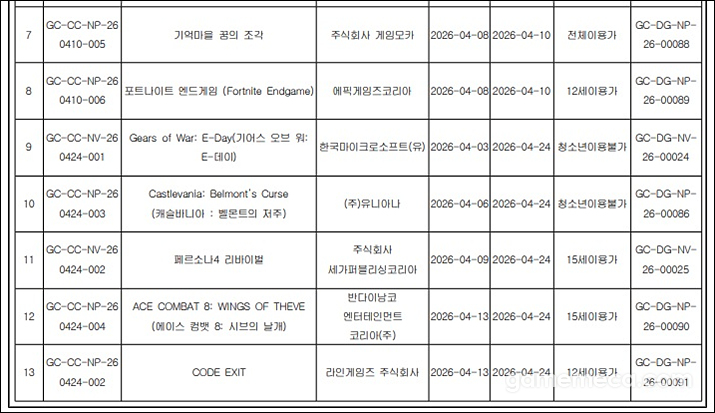
However, our investigation has revealed that this is not due to procedural shortcomings by the GRAC, but rather a consequence of the current South Korean game law. A GRAC official stated in a conversation with Gamemeca, "The publication on the electronic official gazette is a legitimate procedure mandated by Article 24 of the current Game Industry Promotion Act."
According to the GRAC official, while it's possible to withhold unpublished information upon a developer's request, all games for which a rating has been decided or cancelled must, by law, be published on the agency's website and the official gazette without exception. The GRAC states that it informs developers and distributors of this legal obligation when such confidentiality requests are made.
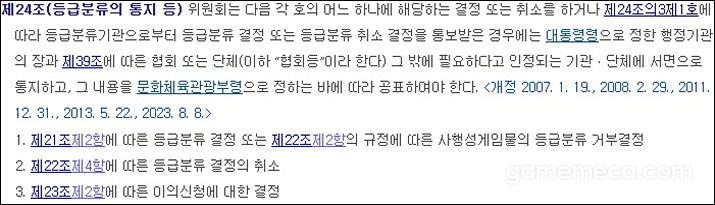
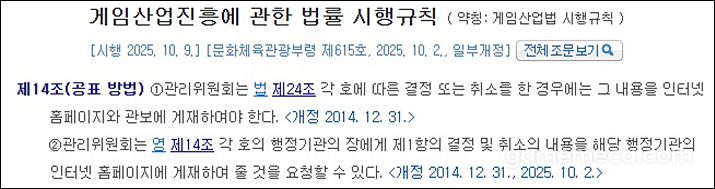
Under the current game law, any new game intended for release in the South Korean market must undergo a classification process. However, once classified, the game's details are inevitably published on the official gazette. This means that regardless of any 'blind' services the GRAC may offer, creators must accept the unavoidable risk of information disclosure to launch their games domestically.
This situation is bound to significantly undermine the competitiveness of the South Korean game market. As discussions surrounding the revision of the Game Law encompass various aspects such as classification, loot box regulation, and addiction control, it's crucial to simultaneously consider institutional frameworks that can foster trust with global game companies in the domestic market.
지난 26일 게임물관리위원회(이하 게임위)가 전자관보에 게시한 등급분류결정 공표로 인해 미공개 신작 게임들의 대략적인 정보가 외부에 드러났다. 이번 확인된 작품은 ‘레고 스카이라인’과 ‘페르소나4 리바이벌’로, 갑작스러운 신규 소식에 국내외 게이머들 사이에서 큰 주목을 받기 시작했다.
이번 사태는 지난 4월 인도네시아 게임 심의 기관의 보안 취약점 관련 유출 사태에 이어, 약 한 달만에 발생한 심의기관발 유출이기도 하다. 물론 당시 유출과는 비교할 수 없는 규모이기는 하나, 연이어 심의 기관을 통한 유출 사례가 반복된 점은 우려를 피할 수 없는 사안이다.
특히, 국내의 경우에는 게임 심의과정에서의 신작 정보 유출이 국정감사에서 정식 의제로 다루어졌을 만큼 해묵은 과제로 꼽혀왔다. 특히 26일 공개된 등급분류번호가 게임위 홈페이지를 통해 검색되지 않는 것으로 볼 때, 일각에서는 이번 사태를 업체의 블라인드 요청을 미숙지한 게임위 절차 상의 문제가 아니냐는 시선으로 바라보기도 했다.
취재결과 이는 게임위의 절차 미숙 등이 아닌, 국내 게임법에 있는 것으로 확인됐다. 게임메카와의 통화에서 게임위 관계자는 “이번 전자관보는 현행 게임산업진흥에 관한 법률 제24조에 의거한 정당한 절차”라는 입장을 밝혔다.
게임위 관계자에 따르면, 심의업체측 블라인드 요청에 따라 미공개 처리는 가능하지만, 등급분류가 결정되거나 취소된 모든 게임물은 법적으로 예외 없이 기관 웹사이트와 전자관보에 게시해야 한다. 이에 개발사나 유통사로부터 블라인드 요청이 있을 시, 게임위는 이와 같은 법적 의무 조항을 사전 고지하고 있다.
현행 게임법상 국내 게임 시장에 신작을 출시하기 위해서는 반드시 심의를 거쳐야 한다. 그러나, 심의를 거친 게임은 전자관보 게시가 불가피하다. 즉, 게임위가 개발사 및 유통사를 위한 블라인드 서비스를 제공하는 것과 별개로 창작자들은 국내에 게임을 출시하기 위해 불가피한 정보 유출을 감수해야 하는 실정이다.
이는 국내 게임 시장의 경쟁력을 크게 낮추는 요인이 될 수밖에 없다. 최근 게임법 전부개정안을 추진하는 과정에서 심의, 확률 규제, 과몰입 규제 등의 여러 논의가 이루어지는 가운데, 글로벌 게임사들로부터 국내 시장의 신뢰도를 형성할 수 있는 제도적 장치를 함께 고려해야만 하는 시점이다.
This news was translated by AI.

I am dedicated to games and writing. viina@gamemeca.com
READ MORE
-
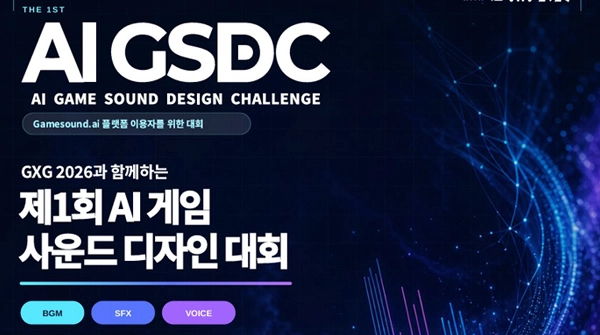 Recruiting participants for the AI Game Sound Design Challenge in collaboration with GXG
-
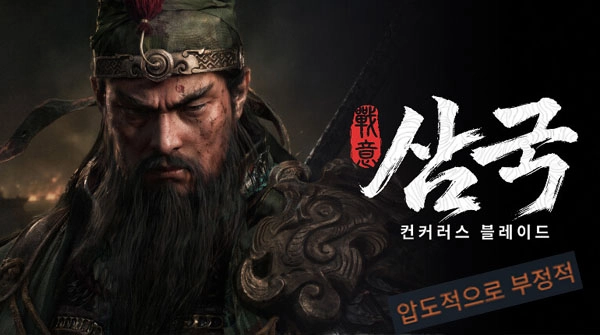 [Today's Steam] Conqueror’s Blade: Three Kingdoms, Overwhelmingly Negative
-
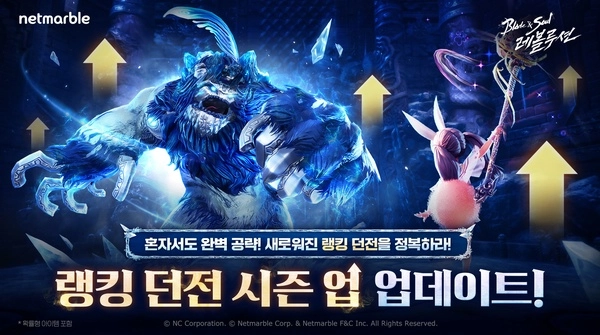 Blade & Soul Revolution, Ranking Dungeon shifts from 2-player co-op to 1-player competition
-
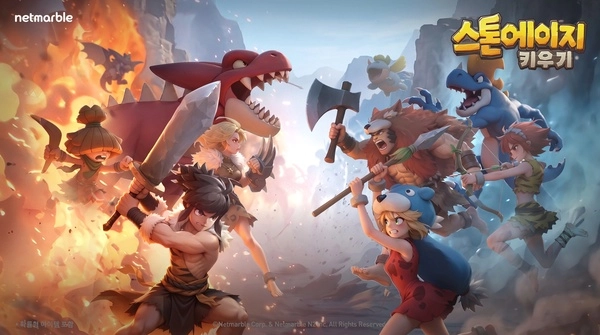 Competition to determine the strongest, [Stone Age Idle] Tribe War begins
MOST POPULAR NEWS
- [gamescom 26] An RPG set in the US dominated by Japanese culture is coming
- "I am back": Kylian Mbappé selected as cover model for EA Sports FC 27
- Webzen's 'Dragon Sword: Awakening' Injunction Dismissed, Steam Launch Confirmed
- High-end Gaming PC Giveaway Event Hosted for Kakao PUBG
- Hyper Boost and Level Revamp, Black Desert Second Half Roadmap Revealed
- KEL PUBG Mobile Finals to be Held in Daejeon on the 25th
- Mbappe and Bellingham on the Cover, 'EA Sports FC 27' Launches September 25
- The Seven Deadly Sins: Grand CROSS, TS characters of Meliodas and Ban arrive
- Blizzard Unveils BlizzCon 2026 Digital Collection Bundles
- Super Creative CEOs Kang Ki-hyun and Kim Hyung-suk to Depart from the Company
MEDIA PARTNERSHIPS



GAMEMECA SNS