
Esports as Cultural Heritage: Policy Forum Held at the National Assembly
e스포츠를 문화유산으로, 국회에서 정책포럼 열렸다
2026.05.29 18:04 UTC+9
AI Summary
The Korea e-Sports Industry Association and National Assembly Member Kim Sung-hoe held the '2026 Korea e-Sports Policy Forum' on May 29th at the National Assembly Members' Office Building. The forum's theme was 'Esports as Cultural Heritage - From Past Records to Present Future Value.' It aimed to systematically preserve and pass down to future generations the game records, broadcast footage, player and fan memories, stadium culture, and community materials accumulated by Korea as the birthplace and leading nation of esports.
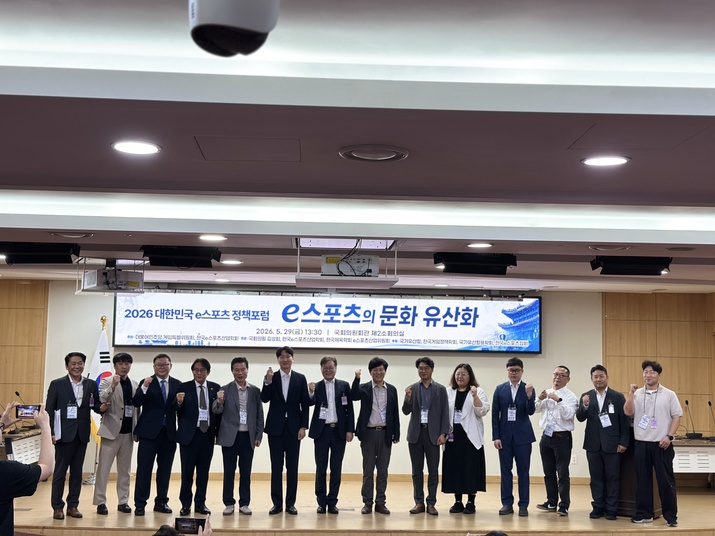
The Korea e-Sports Industry Association and National Assembly Member Kim Seong-hoe held the '2026 Korea e-Sports Policy Forum' on May 29th at the second sub-conference room of the National Assembly Members' Office Building.
This forum was held under the theme 'e-Sports as Cultural Heritage – From Past Records to Present Future Value.' The intention was to systematically preserve the game records, broadcast footage, memories of players and fandom, stadium cultures, and community materials accumulated by Korea, as the birthplace and leading nation of e-sports, and to pass them down to future generations.
Song Seok-rok, a professor at Kyongdong University, who delivered the keynote address, emphasised that e-sports has already established itself as the representative culture of the digital generation, and that early game footage, replay data, broadcast materials, player equipment, and fandom culture are not merely industrial data but important assets of Korea's digital cultural history.
Professor Song Seok-rok stated, 'Heritage must have a narrative and meet basic conditions such as being original and unique, and it is now time to create value from heritage.' He also proposed adding provisions related to heritage preservation to the e-Sports Promotion Act and argued for the establishment of a national-level recording and preservation system, such as preliminary heritage registration by the National Heritage Agency and a Digital Heritage Museum.
The subsequent presentations focused on the possibility of e-sports heritage preservation linked with the national heritage system. Jang Young-gi, an official from the National Heritage Agency, presented ways to expand the heritage value of e-sports, focusing on national heritage governance and the preliminary cultural heritage system. He explained that even modern cultural assets less than 50 years old can be proactively protected through the preliminary cultural heritage system.
Lee Dong-bum, president of the Korea Society of Heritage Studies, highlighted the historical, social, and industrial value of e-sports through cases of sports industry heritage preservation. He stated that symbolic locations and records like the Gwangalli Pro League finals are representative examples of e-sports' spread into popular culture and could be major candidates for designation as preliminary cultural heritage and the establishment of public archives in the future.
Cho Hyun-joo, a senior research fellow at the Korea Institute of Sports Science, stressed that the starting point for e-sports heritage preservation is the establishment of a public recording system for 'what, who, and how to preserve.' She proposed that not only game footage but also patch notes, replays, oral records, fan communities, memes, and fan art should be left as important records constituting the e-sports cultural ecosystem.
Heo Geon-sik, a professor at Seoil University, presented a policy execution roadmap for e-sports preliminary cultural heritage designation, stating that the process should involve value assessment to check against risks of privatization, preliminary heritage designation, preservation and archiving, establishing an industry-culture convergence ecosystem, and strengthening the legal and institutional ecosystem in stages. He emphasised that a public-private joint working group, stable budget allocation, and fund creation are necessary for practical implementation.
Attendees agreed on the necessity of several measures for e-sports heritage preservation, including: ▲Formation of an e-sports heritage working group ▲Conducting surveys and creating inventories ▲Discovering preliminary cultural heritage candidates ▲Building a digital archive ▲Public-private cooperation to resolve intellectual property issues ▲Linking with education, exhibitions, and tourism for utilisation ▲Promoting international standardisation.
The Korea e-Sports Industry Association stated, 'e-Sports heritage preservation is not just about preserving the past; it is a future strategy for Korea to lead the international standards of digital cultural heritage.' They added, 'Building on this forum, we will continue subsequent discussions to preserve and utilise e-sports' historical records and cultural value as public assets.'
한국e스포츠산업학회와 김성회 국회의원은 5월 29일 국회의원회관 제2소회의실에서 '2026 대한민국 e스포츠 정책포럼'을 개최했다.
이번 포럼은 'e스포츠의 문화 유산화 – 과거의 기록에서 현재의 미래가치로'를 주제로 삼았다. 대한민국이 e스포츠의 발상지이자 선도국으로서 축적해 온 경기 기록, 방송 영상, 선수와 팬덤의 기억, 경기장 문화, 커뮤니티 자료 등을 체계적으로 보존하고 미래세대에 전승해야 한다는 취지에서 진행됐다.
기조연설을 맡은 송석록 경동대학교 교수는 e스포츠는 이미 디지털 세대의 대표 문화로 자리 잡았으며, 초기 경기 영상과 리플레이 데이터, 방송 자료, 선수 장비, 팬덤 문화 등은 단순한 산업 자료가 아니라 대한민국 디지털 문화사의 중요한 자산이라 강조했다.
송석록 교수는 "유산은 서사가 있어야 하며 원본과 유일한 형태 등 기본 조건을 갖춰야 하고 이제는 유산의 가치를 창출할 때이다"라고 말했다. 또한 e스포츠진흥법에 유산화 관련 조항의 추가하는 것을 제안했고, 국가유산청 예비 유산등록 및 디지탈 헤리티지 박물관 같은 국가 차원의 기록화와 보존 체계를 마련해야 한다고 주장했다.
이어진 발제에서는 국가유산 제도와 연계한 e스포츠 유산화 가능성을 집중적으로 살펴봤다. 장영기 국가유산청 사무관은 국가유산 거버넌스와 예비문화유산 제도를 중심으로 e스포츠의 유산적 가치 확산 방안을 발표했다. 50년 미만의 현대 문화자산도 예비문화유산 제도를 통해 선제적으로 보호할 수 있다고 설명했다.
이동범 국가유산활용학회 회장은 스포츠산업 유산화 사례를 통해 e스포츠가 지닌 역사적·사회적·산업적 가치를 조명했다. 광안리 프로리그 결승과 같은 상징적 장소와 기록물은 한국 e스포츠가 대중문화로 확산된 대표적 사례로, 향후 예비문화유산 지정과 공공 아카이브 구축의 주요 후보가 될 수 있다고 밝혔다.
조현주 한국스포츠과학원 선임연구위원은 e스포츠 유산화의 출발점은 '무엇을, 누가, 어떻게 남길 것인가'에 대한 공공 기록화 체계 마련이라고 강조했다. 경기 영상뿐 아니라 패치노트, 리플레이, 구술 기록, 팬 커뮤니티, 밈과 팬아트 등도 e스포츠 문화 생태계를 구성하는 중요한 기록으로 남겨야 한다고 제안했다.
허건식 서일대학교 교수는 e스포츠 예비문화유산 지정 이후의 정책적 실행 로드맵을 제시하며, 사유화 위험성 견제 가치 평가와 예비유산 지정, 보존 및 아카이빙, 산업·문화 융합 생태계 확립, 법제도적 생태계 강화를 단계적으로 추진해야 한다고 말했다. 실질적인 실행을 위해 민관 합동 워킹그룹 운영, 안정적 예산 배정, 기금 조성 등이 갖춰져야 한다고 강조했다.
참석자들은 e스포츠 유산화를 위해 ▲e스포츠 유산화 협의체 구성 ▲실태조사 및 목록화 ▲예비문화유산 후보 발굴 ▲디지털 아카이브 구축 ▲지식재산권 문제 해결을 위한 민관 협력 ▲교육·전시·관광 연계 활용 ▲국제 표준화 추진 등이 필요하다는 데 뜻을 모았다.
한국e스포츠산업학회는 "e스포츠 유산화는 과거를 보존하는 데 그치지 않고, 대한민국이 디지털 문화유산의 국제 기준을 선도하기 위한 미래 전략"이라며 "이번 포럼을 계기로 e스포츠의 역사적 기록과 문화적 가치를 공공자산으로 보존·활용하기 위한 후속 논의를 이어가겠다"고 밝혔다.
This news was translated by AI.

Let's not lose our initial resolve. Meticulously, one by one. risell@gamemeca.com
READ MORE
-
 Recruiting participants for the AI Game Sound Design Challenge in collaboration with GXG
-
 [Today's Steam] Conqueror’s Blade: Three Kingdoms, Overwhelmingly Negative
-
 Blade & Soul Revolution, Ranking Dungeon shifts from 2-player co-op to 1-player competition
-
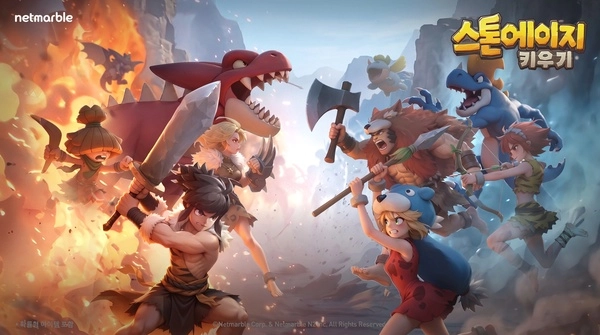 Competition to determine the strongest, [Stone Age Idle] Tribe War begins

MOST POPULAR NEWS
- [gamescom 26] An RPG set in the US dominated by Japanese culture is coming
- "I am back": Kylian Mbappé selected as cover model for EA Sports FC 27
- Webzen's 'Dragon Sword: Awakening' Injunction Dismissed, Steam Launch Confirmed
- High-end Gaming PC Giveaway Event Hosted for Kakao PUBG
- Hyper Boost and Level Revamp, Black Desert Second Half Roadmap Revealed
- KEL PUBG Mobile Finals to be Held in Daejeon on the 25th
- Mbappe and Bellingham on the Cover, 'EA Sports FC 27' Launches September 25
- The Seven Deadly Sins: Grand CROSS, TS characters of Meliodas and Ban arrive
- Blizzard Unveils BlizzCon 2026 Digital Collection Bundles
- Super Creative CEOs Kang Ki-hyun and Kim Hyung-suk to Depart from the Company
MEDIA PARTNERSHIPS



GAMEMECA SNS