
[Reporter's Notebook] 'Stop Killing Games' Law's Loopholes
[기자수첩] '스탑 킬링 게임즈' 법의 허점
2026.06.02 13:16 UTC+9
AI Summary
The so-called 'Stop Killing Games Act (AB 1921),' recently passed by the California State Assembly, has become a hot topic. This law is a response from the institutional sphere to the 'Stop Killing Games' movement, triggered by Ubisoft's 'The Crew' service termination incident. While the initial intention was good, the practice of forcing unnecessary always-on server connections for typical single-player games and blocking access to existing gameplay upon service termination must disappear.
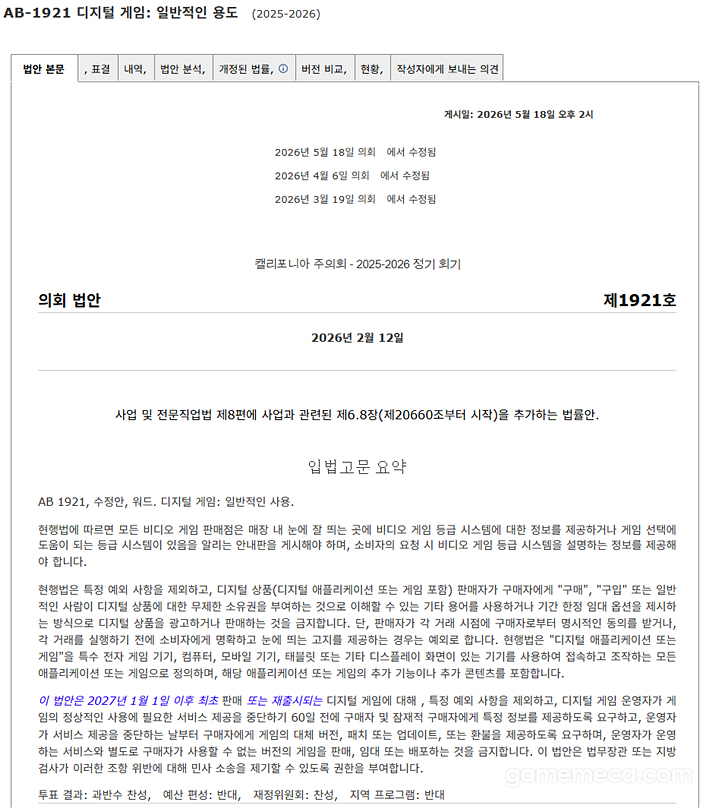
has recently emerged as a hot potato.This law, an institutional response to the 'Stop Killing Games' movement sparked by Ubisoft's 'The Crew' service termination, was initially well-intentioned. The practice of forcing unnecessary always-on server connections for typically single-player games and blocking access to existing gameplay upon service termination absolutely needs to end.
However, when you shift focus to online-only games that critically require multiplayer (MMORPGs, PvP fighting games, etc.), this bill is riddled with fatally flawed provisions. The reason for the industry's backlash and gamers' concerns simultaneously erupting is largely due to the near-complete lack of countermeasures or distinctions for this very aspect.
Diving into the bill, it stipulates that game companies must ensure consumers can continue to run the game 'in some fashion' when service ends. This is an incredibly vague phrase, allowing for a multitude of interpretations. For instance, in a 5v5 team-based shooter, a P2P method using intermediaries like Steam where users take turns hosting would be ideal. Yet, instead of such a method, simply dropping nine 'dumb AI bots' with rudimentary intelligence into the game and claiming it supports single-player offline play would legally be no issue at all. What about MMORPGs? Even if players are just left to wander empty maps with only NPCs and monsters, devoid of any other players, the legal requirements are met.
If this bill is enacted as is, the emergence of such deceptive offline patches is as clear as day. From the company's perspective, when a game fails and its service is terminated, they lack the financial capacity to incur additional development resources and server costs for regulatory compliance. Naturally, users will not be satisfied with such patches. Ultimately, the emotional chasm between gamers hurt by these half-hearted results and game companies will deepen to an irrecoverable extent. A law intended to prevent unilateral game service termination could instead become a catalyst that fuels conflict between both parties.
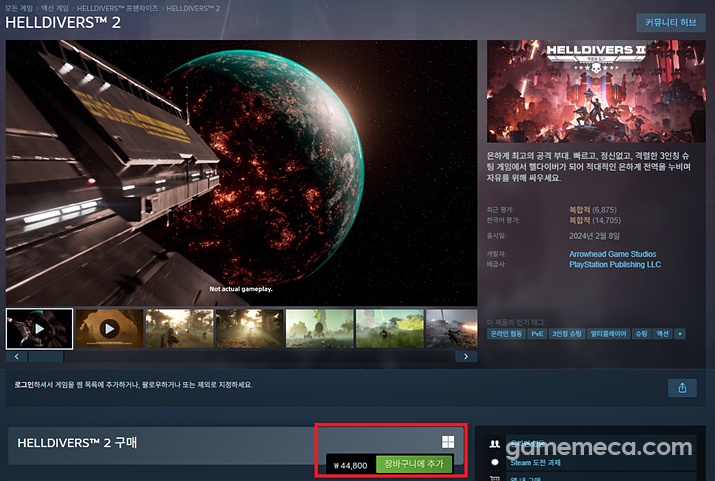
What's even more concerning is that this law will cause a regression in the business model ecosystem of online games. The exceptions in this law are 'subscription-based services' and 'free-to-play games (with microtransaction models).' Online multiplayer-only games that require an initial package purchase fee fall under the regulations. Games like Helldivers 2, New World, Chivalry 2, and PlayerUnknown's Battlegrounds before its free-to-play transition are prime examples. These package-based games tend to have less aggressive monetization compared to free-to-play titles and typically offer stable gameplay and rich content from the outset.
However, if the bill passes, game companies will have no reason to release multiplayer games in a package format. Consequently, the industry will be forced to shift all multiplayer games to a free-to-play or monthly subscription model to circumvent legal loopholes. The package-based multiplayer business model, which clearly had its advantages, is facing its demise.
The game industry operates on a global scale. And the United States, now and historically, is the world's largest market and the home base for giant game companies like Activision Blizzard, EA, Valve, Take-Two, Microsoft, and Riot Games. In this environment, a bizarre service that applies separate offline patches or refund systems only to games distributed in California is impossible. Therefore, this bill is highly likely to operate as a de facto global standard. South Korea's game industry is also actively knocking on the doors of the North American and European markets, primarily through console and Steam platforms, making it inevitable that they will be bound by this legal framework.
The legislative intent to protect consumer rights and preserve digital heritage is commendable. However, there remain deep concerns about this bill, which has passed the California State Assembly in such an unpolished state due to a lack of understanding of the game industry and technology. The process still includes review by the California State Senate subcommittee, hearings, a vote, and the Governor's signature. During that process, crucial amendments are desperately needed, such as grading 'post-end-of-life operability,' transparently informing consumers before purchase about whether P2P network access or high-quality AI bots will be provided, or adding further exceptions for online-only multiplayer games.
최근 미국 캘리포니아 주 하원을 통과한 일명 '스탑 킬링 게임즈 법(AB 1921)'이 뜨거운 감자로 떠올랐다. 이 법은 유비소프트의 '더 크루' 서비스 종료 사태로 촉발된 '스톱 킬링 게임즈' 운동에 대한 제도권의 응답으로, 당초 취지 자체는 좋았다. 전형적인 싱글플레이 게임임에도 불구하고 불필요한 항시 서버 연결을 강제하고, 서비스 종료 시 기존 플레이에까지 접속을 차단하던 관행은 사라져야만 한다.
하지만, 멀티플레이가 필수적인 온라인 전용 게임(MMORPG, PvP 대전 게임 등)으로 시선을 돌려보면, 이 법안은 치명적인 허점투성이 조항들로 가득 차 있다. 업계 반발과 게이머들의 우려가 동시에 터져나오는 이유도 사실상 이 부분에 대한 대책이나 구분이 전무할 정도이기 때문이다.
해당 법안을 뜯어보면, 게임사는 게임 서비스가 종료될 때 소비자가 '어떠한 형태로든(in some fashion)' 게임을 계속 실행할 수 있게만 조치하라고 규정하고 있다. 굉장히 모호한 문구이기에, 다양한 해석이 가능하다. 예를 들어 5 대 5 팀 대전 슈팅 게임의 경우, 스팀 등 중개 서버를 사용한 P2P 방식으로 유저끼리 호스트 역할을 맡게 하는 것이 이상적이다. 그러나 이러한 방식 대신 1차원적인 지능의 '깡통 AI 봇' 9명만 덩그러니 던져놓고 싱글 플레이를 지원하기 위한 오프라인 패치라고 우겨도 법적으로는 아무런 문제가 없다. MMORPG는 어떤가? NPC와 몬스터만 있을 뿐 다른 플레이어는 아무도 없는 텅 빈 맵을 혼자 걸어 다니게만 만들어도 법률 요건은 충족한다.
만약 해당 법안이 이대로 시행될 경우, 이러한 기만적인 오프라인 패치가 등장할 것은 불 보듯 뻔하다. 업체 입장에서는 게임이 흥행하지 못해 서비스를 종료하는 마당에 규제 준수를 위해 불필요한 개발 리소스와 서버 비용을 추가로 지불할 여유가 없기 때문이다. 당연하겠지만, 유저들이 이런 패치에 만족할 리는 없다. 결국 무성의한 결과물에 상처받은 게이머들과 게임업체 간의 감정적 골은 회복 불가능한 수준으로 깊어질 수밖에 없다. 일방적 게임 서비스 종료를 막는 법이 오히려 양측의 갈등을 부추기는 촉매제가 될 수도 있다.
더욱 우려스러운 점은 이 법으로 인해 온라인게임의 비즈니스 모델 생태계가 퇴행할 것이라는 것이다. 이 법에서 예외 사항으로 두고 있는 게임은 '구독형 서비스(월정액 방식)'와 '무료 게임(부분유료화 모델)'이다. 초기 패키지 구매 비용을 지불하는 온라인 멀티플레이 전용 게임은 규제 대상이다. 헬다이버즈 2, 뉴 월드, 시벌리 2, 무료화 이전 배틀그라운드와 같은 게임이 대표적이다. 이러한 패키지 형태 게임의 경우 부분유료화 게임에 비해 추가 과금 유도가 비교적 덜하고, 초반부터 안정적인 게임과 풍부한 콘텐츠를 제공하는 경향이 짙다.
그러나 해당 법이 통과되면 게임사들은 굳이 패키지 형태로 멀티플레이 게임을 출시할 이유가 없어진다. 결국 업계는 법망을 피하기 위해 모든 멀티플레이 게임을 부분 유료화 또는 월정액 방식으로 전환할 수밖에 없다. 분명한 장점이 존재하던 패키지형 멀티플레이 BM이 종말을 맞이하는 것이다.
게임업계는 글로벌 중심으로 돌아간다. 그리고 미국은 예나 지금이나 세계 최대 시장이자 액티비전 블리자드, EA, 밸브, 테이크투, MS, 라이엇게임즈 등 거대 게임사들의 본진이기도 하다. 이러한 환경에서 캘리포니아 주에서 유통되는 게임에만 따로 오프라인 패치나 환불 시스템을 적용하는 기형적인 서비스는 불가능하기에, 이 법안은 사실상 글로벌 스탠다드로 작동하게 될 확률이 매우 높다. 국내 게임업계 역시 콘솔 및 스팀 플랫폼을 필두로 북미·유럽 시장의 문을 적극적으로 두들기고 있기에, 해당 법망에 귀속될 수밖에 없다.
소비자의 권리를 지키고 디지털 유산을 보존하겠다는 입법 취지는 훌륭하다. 하지만 해당 법안이 게임산업과 기술에 대한 몰이해로 인해 어설픈 모습으로 캘리포니아 주 하원을 통과한 것에 대해서는 우려가 짙게 남는다. 아직 캘리포니아 주 상원 소위원회 심사, 청문회, 표결, 주지사 서명까지의 과정이 남아 있다. 그 과정 중에 '수명 종료 후 운용성'을 등급화하고, P2P 네트워크 개방이나 완성도 높은 AI 봇 탑재 여부를 구매 전 소비자에게 투명하게 고지하게끔 하거나, 온라인 전용 멀티플레이 게임에 대한 예외 사항을 더 추가하는 등의 보완이 절실하다.
This news was translated by AI.

I am the head of the GameMeca editorial team. jong31@gamemeca.com

MOST POPULAR NEWS
- [gamescom 26] An RPG set in the US dominated by Japanese culture is coming
- "I am back": Kylian Mbappé selected as cover model for EA Sports FC 27
- Webzen's 'Dragon Sword: Awakening' Injunction Dismissed, Steam Launch Confirmed
- High-end Gaming PC Giveaway Event Hosted for Kakao PUBG
- Hyper Boost and Level Revamp, Black Desert Second Half Roadmap Revealed
- KEL PUBG Mobile Finals to be Held in Daejeon on the 25th
- Mbappe and Bellingham on the Cover, 'EA Sports FC 27' Launches September 25
- The Seven Deadly Sins: Grand CROSS, TS characters of Meliodas and Ban arrive
- Blizzard Unveils BlizzCon 2026 Digital Collection Bundles
- Super Creative CEOs Kang Ki-hyun and Kim Hyung-suk to Depart from the Company
MEDIA PARTNERSHIPS



GAMEMECA SNS