
HOMM: Olden Era, a time machine that instantly steals 40 hours
2026.05.08 17:29 UTC+9
TL;DR (2-3 Sentence Summary)
There's a game called the 'Big Three Time Machines': Civilization, Football Manager, and the Heroes of Might and Magic series. Rumors about these games have circulated since I was a high school student, with unbelievable tales of their power to turn top students into slackers, diligent employees into the unemployed, and college students into dropouts. Among the three, I only actually played 'Civilization 5'.
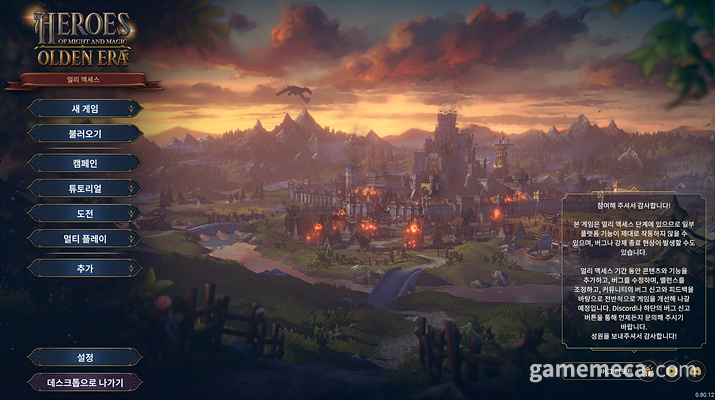
There's a game that's known as one of the 'big three time machines'. Civilization, Football Manager, and the Heroes of Might and Magic series. I'd heard whispers about these since I was a high schooler – outlandish tales of their power to turn top students into slackers, diligent office workers into the unemployed, and university students into perpetual crammers. Of the three, I only ever actually touched 'Civilization V'. Even then, I bolted after seeing the playtime hit 100 hours just from one playthrough on the standard mode.
Then, one day, news of 'Heroes of Might and Magic: Olden Era' (henceforth 'Olden Era') surfaced, piquing my interest. It was a new instalment, and as a games journalist, I felt it was necessary to at least try my hand at a famous series. So, during a long weekend that included Labour Day, I dipped my toes in for a bit, only to be met with a rather grim outcome. Without doing much of anything, my precious holiday vanished, with the playtime already clocking in at 40 hours.
Campaigns, Captivating Backgrounds and Stories
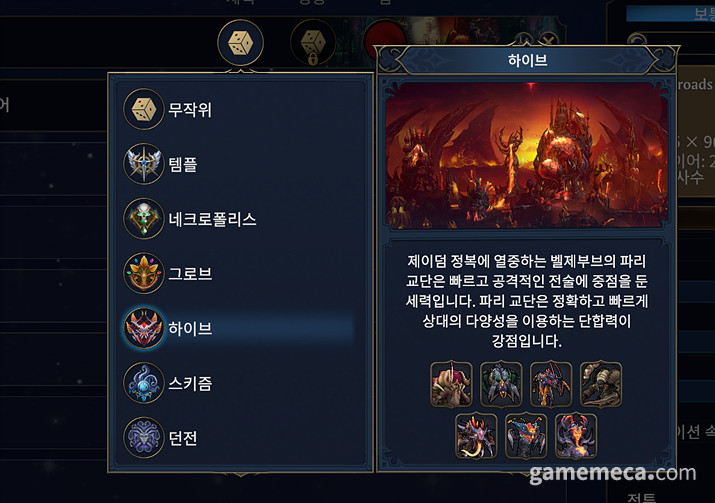
Olden Era is set on the planet 'Enroth', the same world that served as the stage for Heroes of Might and Magic 1-3. It specifically delves into events hundreds of years before the third instalment, allowing players to encounter familiar characters. The factions featured are Temple, Sylvan, Necropolis, Dungeon, Hive, and Schism.
Temple is primarily comprised of human paladins, Sylvan are forest dwellers, Necropolis are necromancers, and Dungeon is a coalition of various allied races. Hive and Schism are new factions; Hive brings to mind fiery insects, while Schism evokes alien creatures. Personally, I found the Dungeon units to have a rather weighty feel, and the Necromancer faction was particularly compelling, with their tier-one Skeleton soldiers either overwhelming enemies with sheer numbers or being swept away themselves.
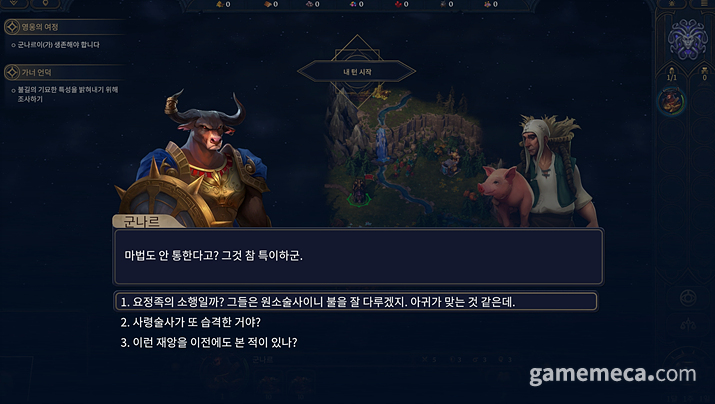
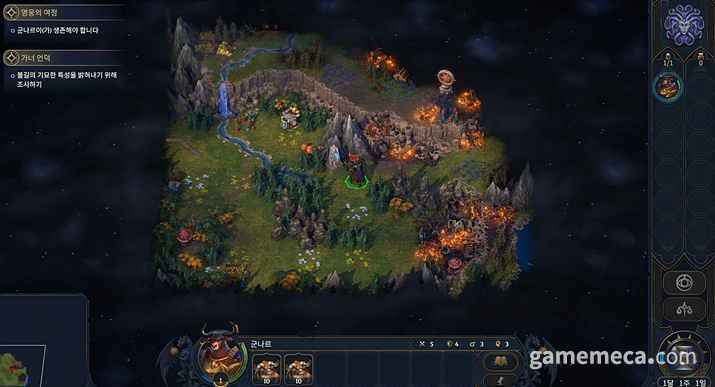
I primarily played the campaign, which serves as a good introduction to the game. Generally, I always play the campaign in strategy games, as it's a great way to understand the game's core mechanics. As Olden Era is still in Early Access, only the first chapter is implemented. Players take on the role of 'Gunnar', a Minotaur hero, investigating a phenomenon where fires refuse to extinguish, following the directives of the 'Three-Headed Beast'.
Overall, the campaign provided a satisfying experience. The difficulty was fitting for a strategy game, not exactly a cakewalk even on normal difficulty, but the sense of accomplishment upon clearing it was significant. Its strength lies in how it entertains newcomers to the HOMM series while teaching them how to play. The overarching synopsis also adds to the enjoyment, piquing interest with the sudden appearance of an unknown force and showcasing its power through a challenging final mission. The presence of special units like 'Guardians of Glory' also adds to the replay value.
Easy to Learn, Difficult to Master
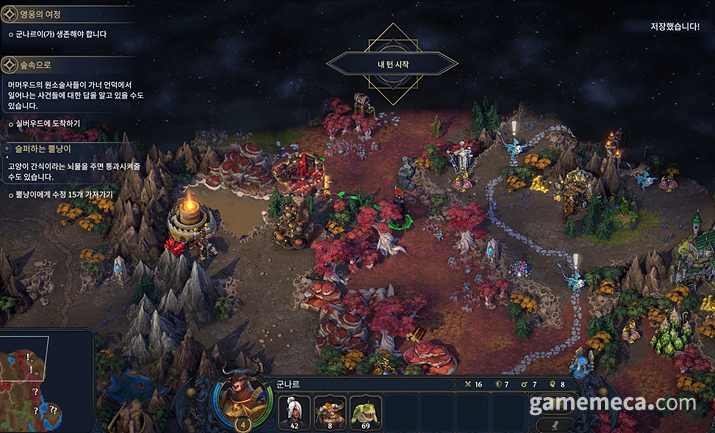
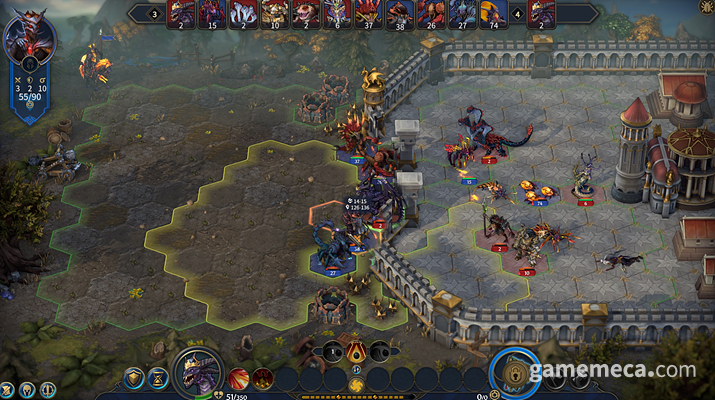
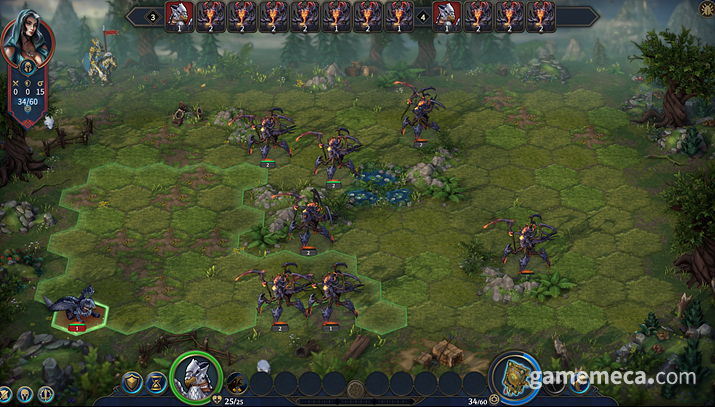
Olden Era adopts the typical strategy game structure of being easy to learn but difficult to master. Combat itself is not hard to get into. Battles are turn-based, taking place on a grid map where units are positioned, and one unit is controlled each turn. The system allows for both movement and attack simultaneously, though initially, I made mistakes by clicking incorrectly or only issuing movement commands, forgetting to attack, requiring some adjustment.
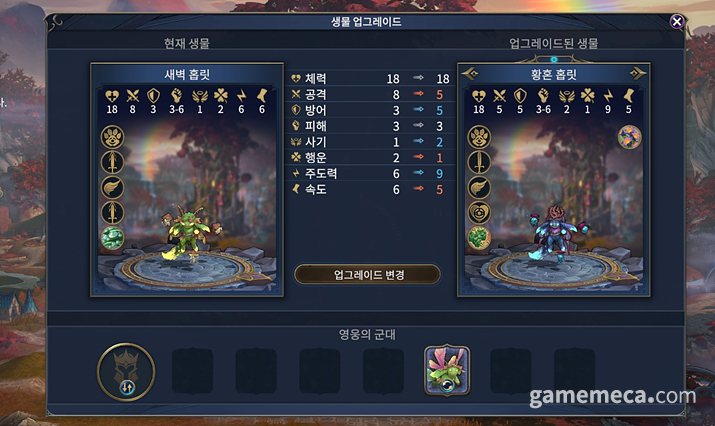
Each unit is composed of soldiers, and the more soldiers a unit has, the stronger its attack power. Units also attempt at least one counter-attack when attacked at close range. Ranged units can attack enemies at any distance freely, but their damage output decreases based on range. Each faction, while not perfectly balanced, presented distinct characteristics. For example, Dungeon units, while not the most tactically diverse, possessed considerable individual combat strength. The Necromancer faction, despite having units with lower combat power, was designed for easy troop multiplication. However, this made them harder to utilise effectively, and their initial units were quite weak, leading to a higher perceived difficulty compared to other factions.
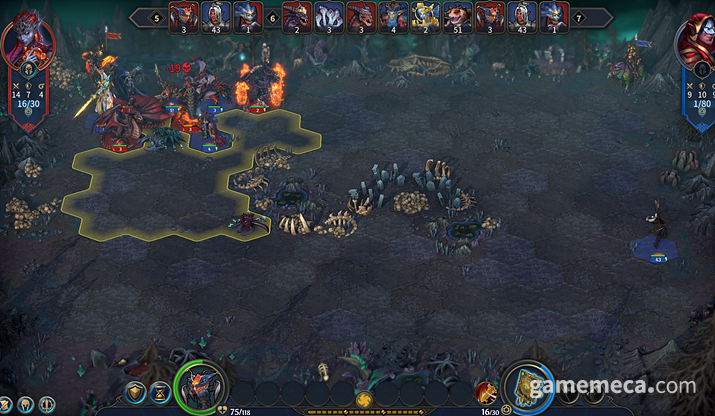
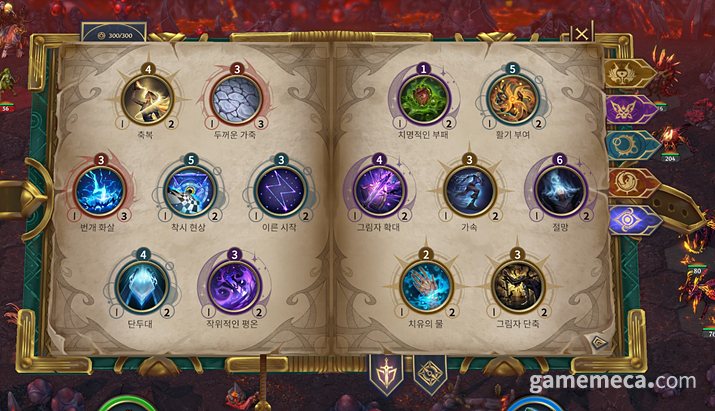
While the core combat rules were straightforward, the numerous interconnected systems and the 'Hero' significantly increased the complexity. Heroes, in particular, are central to the HOMM series. In Olden Era, heroes can perform basic attacks by consuming a shared 'Focus' gauge with their units, and they can cast spells using mana. The sheer number of spells available requires consideration of countless variables. Furthermore, the hero's equipped artifacts, learned skills from levelling up, and faction-specific laws applied to units can lead to unpredictable combat outcomes.
Of course, considering all these factors is the domain of advanced players. A newcomer like myself can still enjoy the game immensely by simplifying many elements. For instance, you can primarily use direct damage spells or exploit AI weaknesses to prolong the game. Given that each hero can command a maximum of seven unit stacks and has limitations on operating multiple troop types due to morale issues, there's no need to be intimidated from the outset.
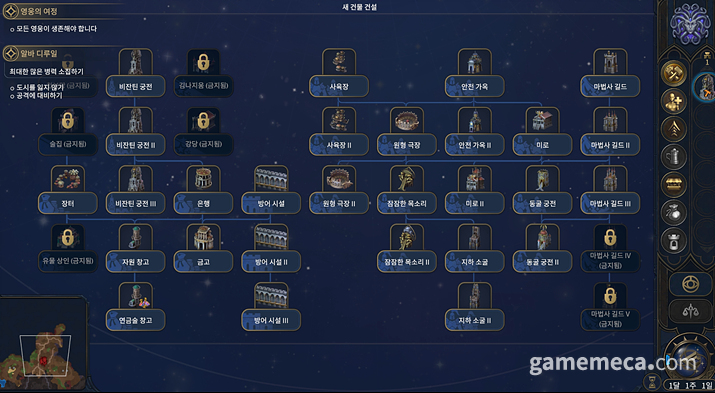
However, as a novice, I did find the lack of clear explanations for certain elements and the somewhat lacking UI frustrating. The directional targeting for attacking enemy units in combat felt clunky, and I only discovered late in the campaign that I could directly interact with buildings in cities. I had assumed the buildings were mere background elements and never even attempted to interact with them. It wasn't until after the campaign concluded that I learned artifacts could be upgraded. It seems likely there are many other features I missed and remained unaware of.
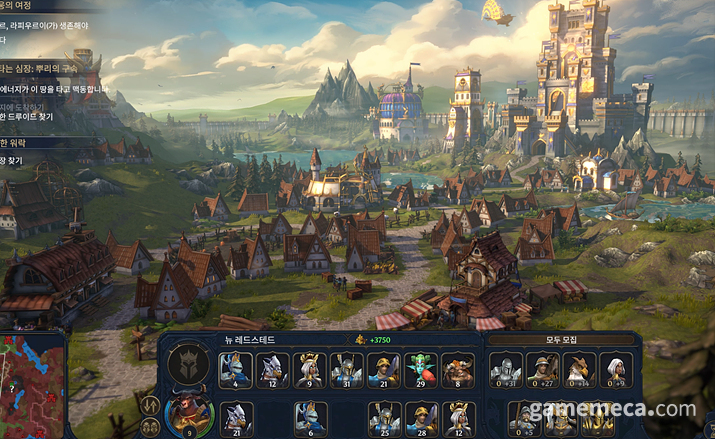
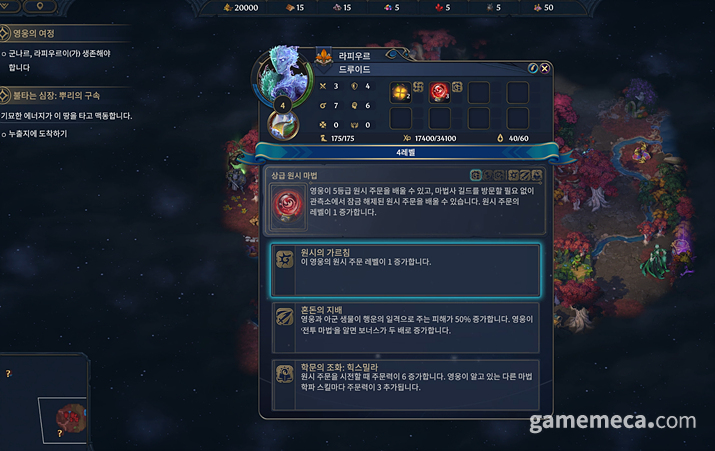
The Time-Sucking Turn-Based Mechanism Remains
Playing Olden Era, I fully experienced why it's considered a prime 'time machine' series. Just finishing the first campaign chapter put my playtime at 35 hours. The main reasons are the synergy between exploring the map and the turn-based system, along with hero-centric combat management. Firstly, troop production is limited to once per week in cities, and each turn represents one day. This means you have to wait 7 turns to acquire replenished troops.
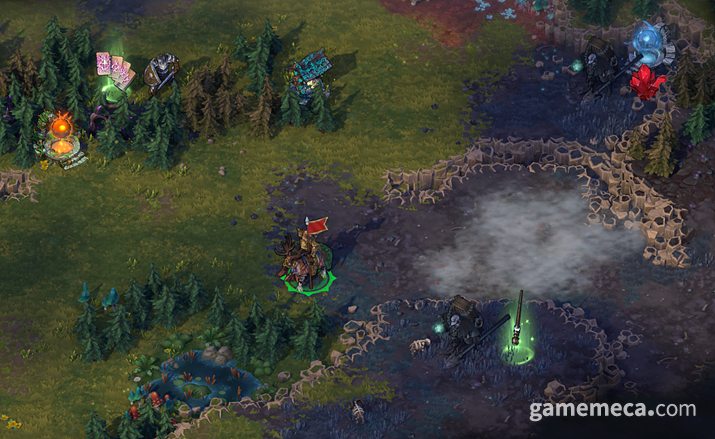
The issue is that the 'Hero' is the one directly managing the troops. The game's heroes have a limited movement range per turn, and they travel across the map with their troops to gather resources. Quicksilver, red ore, gems – numerous resources are required to expand your city. To achieve this, you must find scattered resources on the map and claim resource production sites as your own. If a production site is attacked, it can be lost, necessitating the stationing of some troops to defend it.
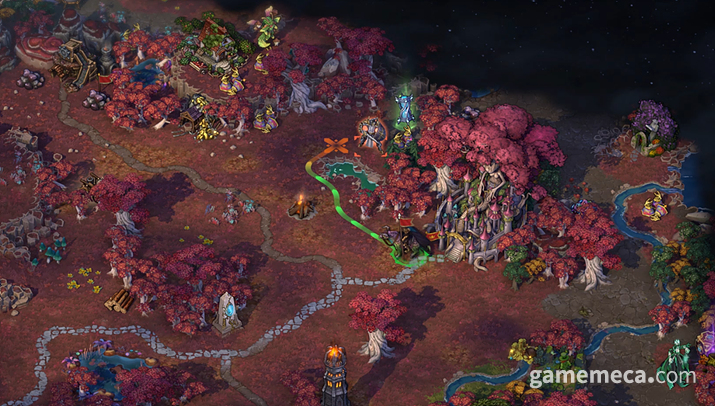
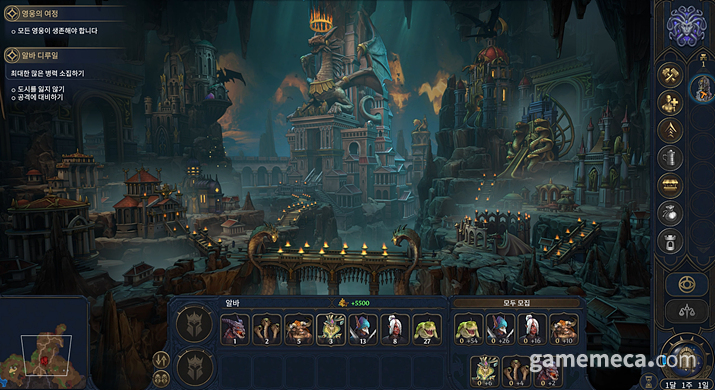
In addition, hero progression is crucial, so you must consistently hunt enemies to level up. Numerous actions are required per turn, and for each additional hero, the workload multiplies. Meanwhile, since troops are produced in cities, if combat depletes your forces, you'll need to return to the city. Overall, the game's structure inherently consumes a significant number of turns.
Of course, this also leads to deep immersion. A hero developed over a long period feels akin to an RPG character, and the thrill of tactical combat when assembling a large army and clashing with opponents is palpable. Even in defeat, strategising anew or contemplating 'What if I had done this then?' is also part of the enjoyment.
Beyond Classics and Campaigns: Various Modes
In addition to the campaign and standard classic mode, Olden Era features several other implemented content types. The Arena, in particular, is a mode where you quickly select a hero, equipment, and army through a draft system to battle opponents, and I found myself playing it frequently. Initially, I was easily defeated due to my lack of knowledge regarding unit strengths, weaknesses, and counters, but as I became more familiar, my win rate increased, and I began to enjoy it.
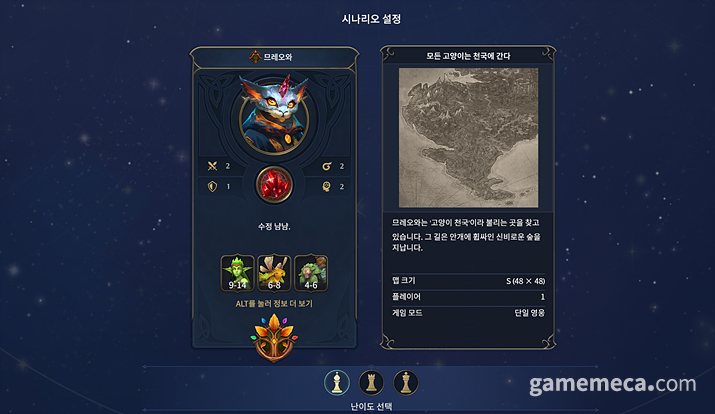
The Single Hero mode, unlike the standard classic mode where you control multiple heroes, allows for the development of just one hero, offering a quicker experience. If you're short on time or find multiple variables overwhelming, I'd recommend the Single Hero mode, where you manage one hero and their corresponding army. Additionally, 'Scenarios' are provided – short story maps that explain the game's lore but are distinct from the campaign.
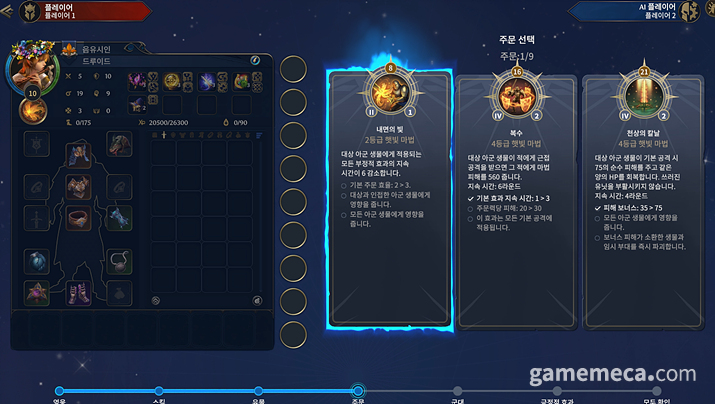
Furthermore, there's content designed as advanced tutorials, called 'Challenges'. Each mission is intriguingly designed. For instance, a mission like 'Defeat enemies using only magic' requires learning to destroy equipment, enhance spells, and upgrade gear to be completable, greatly aiding in understanding the game's rules. However, the naming of this content as 'Challenges' is problematic. Generally, 'challenge' implies high-difficulty content, potentially causing confusion. It might be better to rename it something like 'Advanced Tutorial'.
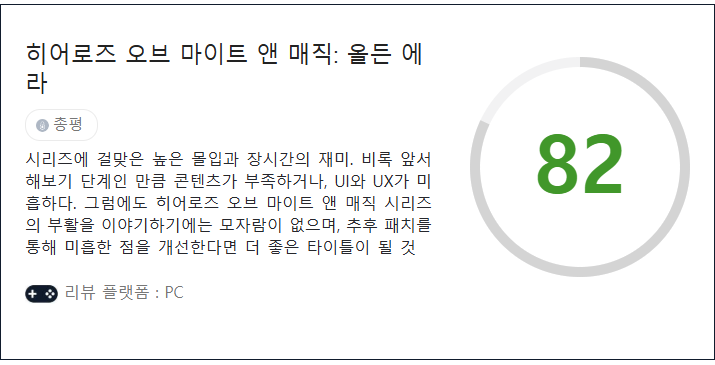
Olden Era delivers high immersion and long-lasting enjoyment befitting the series. Although, as it's in Early Access, some content is lacking, and the UI/UX could be more refined. Nevertheless, it shows promise for the revival of the Heroes of Might and Magic series, and with future patches addressing its shortcomings, it has the potential to become an even better title.
This news was translated by AI.

Kim Hyung Jong, Reporter
I will always love games.skyanze@gamemeca.com
READ MORE
-
 Ace Combat 8 Returns with a Captivating Narrative: An Experience Report
-
 Party Extraction with a Spoonful of Lethal: 'Tomb Busters'
-
 A Bitter Aftertaste of Mannerism in Deep Narrative Two Shots: 'Coffee Talk Tokyo'
-
 Sol: enchant Aims for Stress-Free MMORPG Experience
-
 Azur Promilia Adds Tag Action to Subculture Palworld
-
 Subnautica 2: The Alluring Depths and Suffocating Terror Beyond the Dazzling Scenery
-
 Leehwan is Closer to 'Subculture Crimson Desert' Than 'Subculture GTA'
RECOMMENDED NEWS
MOST POPULAR NEWS
- Nikke Director Yoo Hyung-seok: "Initially Thought of Mustang and Hanson's Setting"
- [Today's steam] Highly Rated Zombie Survival FMV New Release 'Sub-Zero'
- Palworld to Officially Launch on July 10 After 2.5 Years
- Subculture Game Battle: A Report Card of Major New Releases Over the Past Year
- [Game Recs] 5 New Steam Titles Rated 'Overwhelmingly Positive' for Free
- "Low-Quality Games Out" PS Store Bans Publisher Uploading 1,200 Titles
- PlayerUnknown's New Game 'Go Way Back' Officially Canceled, Refunds Issued
- [Today's Steam] 10,000 Won for This Quality? New Game 'Fatekeeper' Garners Interest
- Clash of Giant Monsters and Mechs: GUNDAM ROGUE ORBIT Announced
- New Princess Maker-style Game 'Cradle of Moonlight' Revealed, Featuring Vampire Daughter Raising
MEDIA PARTNERSHIPS


GAMEMECA SNS