
Azur Promilia Adds Tag Action to Subculture Palworld
2026.05.18 18:52 UTC+9
TL;DR (2-3 Sentence Summary)
The hottest topic in the recent subculture game market is the successful combination of familiar genres and the creation of new immersion through them. Various games released this year or upcoming are striving to establish themselves by highlighting their unique charms and 'core content.' In this context, the upcoming Azur Promilia has foreshadowed the fun of collection with its abundant content alongside the unique creature 'Kibo.'
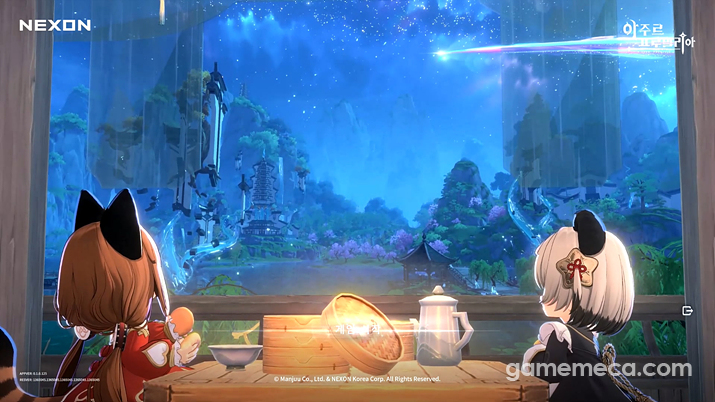
The subculture game market is currently abuzz with the successful fusion of familiar genres, creating new levels of immersion. This year's releases and upcoming titles are all vying for the top spot, each touting its unique charms and 'core content.' Amidst this competitive landscape, the soon-to-be-released Azur Promillia promises the thrill of collection with its myriad of content featuring the peculiar creatures known as 'Kibos.'
Our closed beta playtest revealed that Azur Promillia's true appeal extends beyond mere collection. Real-time action and a variety of challenges that spur the urge to test your mettle follow the collection phase, woven throughout the game.

The tale of Kibos and friends in Promillia
The game opens with a rather unique premise: the protagonist, the 'Sacred Child,' is born from a colossal egg. As this 'Sacred Child,' players will collect Kibos, gather companions, and uncover the world's hidden secrets. Kibos are peculiar beings native to this world. They possess nine distinct attributes, and each individual boasts unique sizes, traits, and personal values, making persistent collection a key objective.
Players can select the gender for their 'Sacred Child' character, and their customized avatar is reflected in real-time across all story cutscenes, heightening immersion. The story progression and cutscenes predominantly feature first-person dialogue sequences, while third-person segments are enhanced with dynamic camera shifts and effects for visual flair.



The gameplay loop involves exploring a vast open world and capturing Kibos. Similar to other subculture open-world titles, players will gather materials from their surroundings and solve puzzles scattered throughout the map. The key differentiator here is 'Kibo collection'; the extent to which you've amassed these creatures directly impacts your comfort in combat, puzzle-solving, and even daily life.
Notably, the main story includes segments that enforce specific level requirements. This experience is gained by solving field puzzles and collecting items, meaning progress can stagnate if you lack a diverse array of elemental Kibos, which are central to many puzzles.
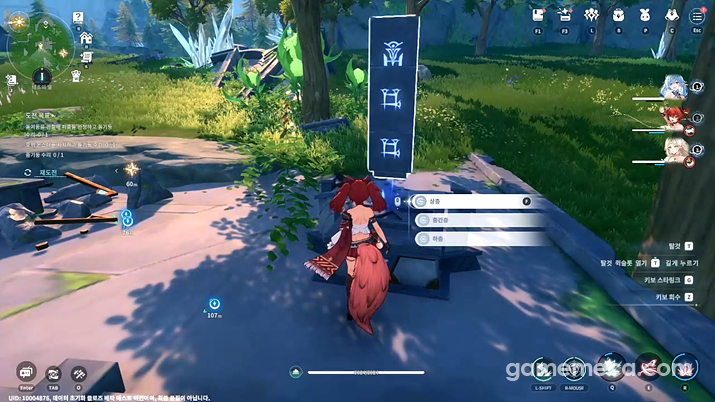
While the visibility of in-field puzzles can be somewhat lacking, a message appears before your character when a puzzle is nearby, serving as a prompt. Although you might struggle without the right Kibo, it's crucial to note that having a variety of elemental Kibos allows for one-button puzzle completion.
Real-time 3-person tag-match combat with partner Kibos
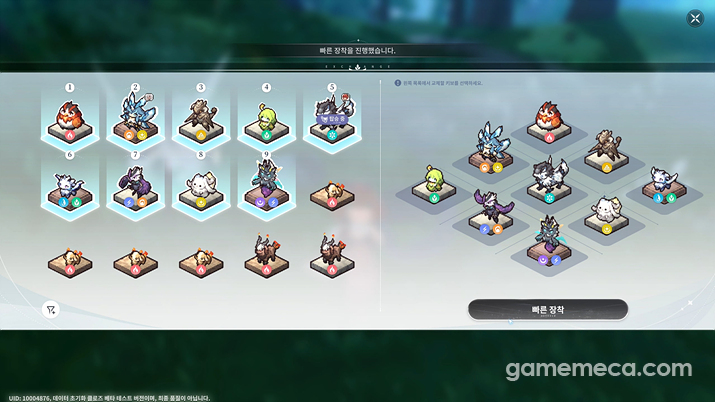
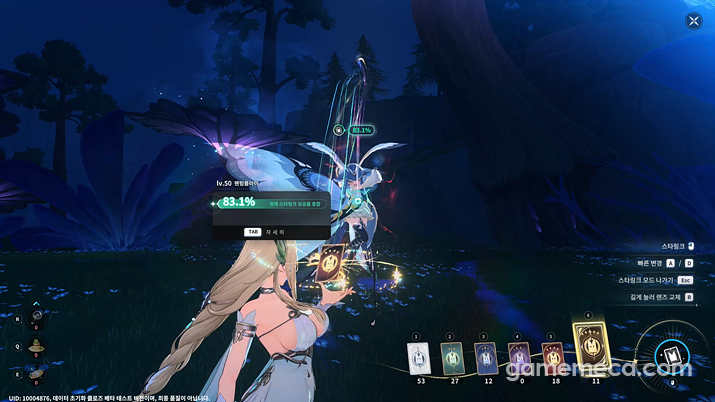
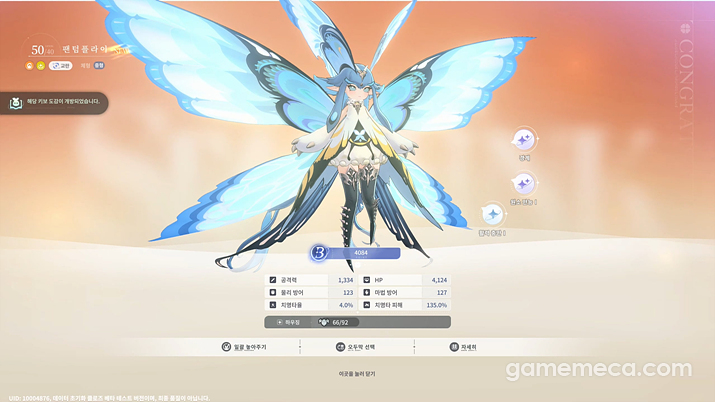
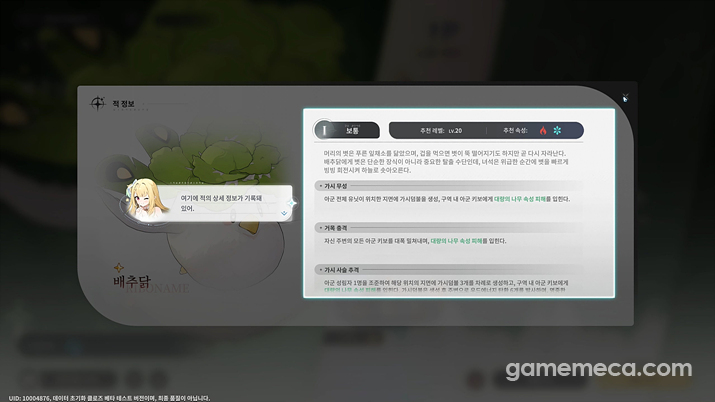
Kibos are the game's signature element and serve as essential partners in combat and adventure. To capture a wild Kibo in the field, you must first deplete its HP and then use a 'Star Link' card. With over 180 types of Kibos, each capture comes with a variety of random options, demanding consistent farming and collection to obtain desired stats.
Each Kibo assists the character with its unique skills during combat or engages in cooperative techniques to break an enemy's guard gauge. In life-simulation content, they aid in increasing production output or automating farming and crop cultivation. Thus, filling out the in-game bestiary while exploring the open-world map becomes a powerful growth motivator and essential part of the gameplay.
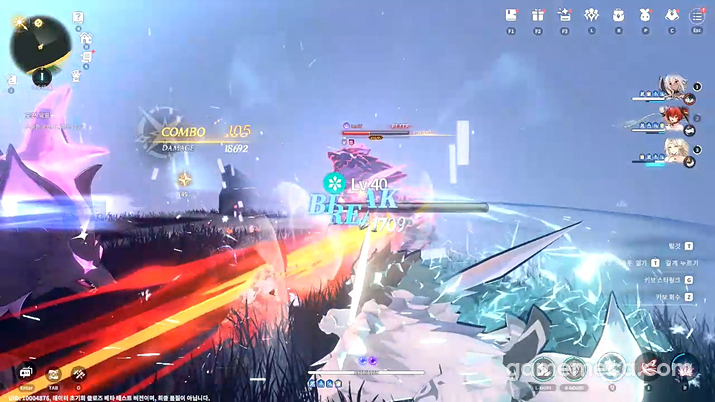
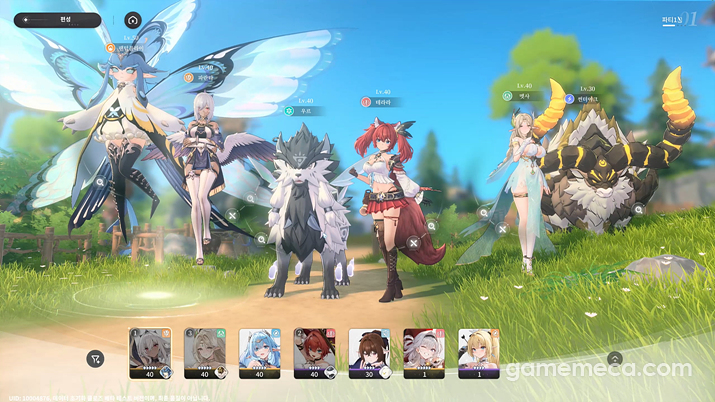
The field combat system is based on a real-time 3-person tag-match format, offering dynamic and fast-paced action through simple button inputs and tag mechanics. The combination of basic attacks with short clicks, charged attacks with holds, and dedicated buttons for skills, evasion, and counter-attacks creates an engaging combat experience, where depleting an enemy's stance gauge leads to a flurry of attacks.
Unlike the level-gated story, combat encounters feature enemy levels but no specific player restrictions, fostering a desire to challenge. By identifying the types of Kibos appearing in the field and combining the five character archetypes – Blast, Destroy, Assault – with the nine elemental attributes of Kibos, one can tackle stronger Kibos even at a lower player level. If a captured Kibo after combat has a higher level than the player, its level is adjusted to match; however, this adjustment is removed as the player progresses, making bold attempts for desired Kibos an efficient strategy.
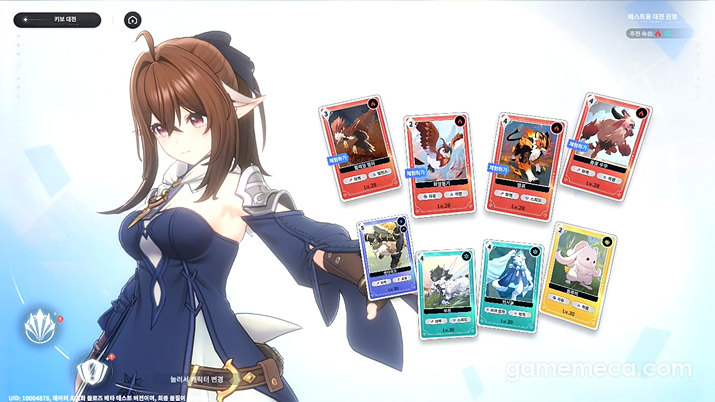
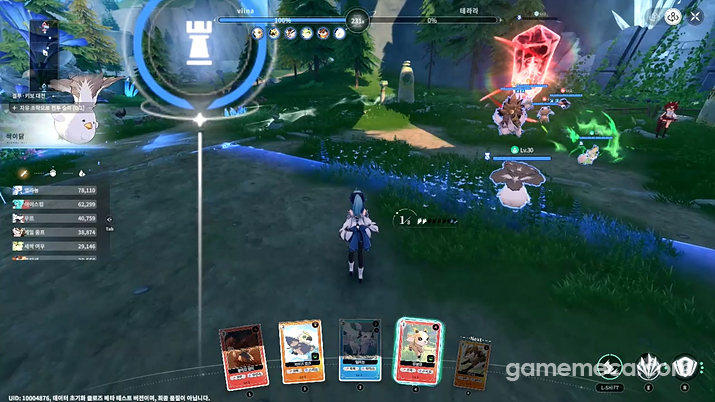
Alongside real-time combat, Kibo-versus-Kibo battles are available as a mini-game. 'Kibo Battle,' implemented as a tower-defense style auto-battler, pits collected Kibos against each other in strategic card-based combat. Players deploy their Kibos sequentially towards the enemy base, manage resources, and strive for victory. Effective cost management and a diverse array of Kibo types and traits are paramount.
This offers a refreshing strategic diversion from the action-heavy main combat, providing players with a moment of respite. Furthermore, the challenge of overcoming NPCs in each village, who wield decks based on specific elements, proved quite engaging. However, the fixed camera perspective and somewhat uninspired presentation during these battles were a relative disappointment.
A bountiful farming life is also possible with Kibos
In terms of life-simulation, the core features revolve around communication with Kibos and a crafting system that integrates farming and creation within a single space. Players can cultivate their own plots on their personal homesteads, growing desired crops and gathering resources like minerals and timber from the field. Harvested materials can be used to prepare meals in cooking pots to satisfy character hunger or serve as food for Kibos. The sandbox-style content is particularly prominent, including the direct crafting of equipment.
In non-combat content, Kibos are instrumental in fully activating production facilities and housing, maximizing efficiency. By assigning Kibos with attributes specialized for farming, mining, lumberjacking, and cooking to respective facilities, resource production efficiency is enhanced. Furthermore, automating tasks such as sowing, watering, and harvesting accelerates base development.
Kibos can also be released into pastures to yield various materials such as feathers and claws. These Kibos roam freely in the same manner as they do in the field, allowing players to approach, pet, and interact with them.
Azur Promillia's core concepts: how refined will it be upon release?
Azur Promillia combines monster collection reminiscent of Palworld with a housing system, and showcases fast-paced tag-action with partner Kibos. Given its amalgamation of proven genres, adaptation and learning curves presented no significant hurdles. However, the level-gating on story progression, a key aspect of growth, suggests a need for mitigating measures to ensure a smoother experience.
Additionally, minor shortcomings were noted in areas such as UI readability and camera settings. Nevertheless, the captivating designs of the Kibos and their diverse traits and concepts, which provide a strong justification for collection, serve as ample motivation to continue playing. We anticipate the game will be refined based on this test feedback and launch in an even better state.
This news was translated by AI.

Shin Jae Yeon, Reporter
I am dedicated to games and writing.viina@gamemeca.com
READ MORE
-
 Ace Combat 8 Returns with a Captivating Narrative: An Experience Report
-
 Party Extraction with a Spoonful of Lethal: 'Tomb Busters'
-
 A Bitter Aftertaste of Mannerism in Deep Narrative Two Shots: 'Coffee Talk Tokyo'
-
 Sol: enchant Aims for Stress-Free MMORPG Experience
-
 Subnautica 2: The Alluring Depths and Suffocating Terror Beyond the Dazzling Scenery
-
 Leehwan is Closer to 'Subculture Crimson Desert' Than 'Subculture GTA'
-
 HOMM: Olden Era, a time machine that instantly steals 40 hours
MOST POPULAR NEWS
- Nikke Director Yoo Hyung-seok: "Initially Thought of Mustang and Hanson's Setting"
- [Today's steam] Highly Rated Zombie Survival FMV New Release 'Sub-Zero'
- Palworld to Officially Launch on July 10 After 2.5 Years
- Subculture Game Battle: A Report Card of Major New Releases Over the Past Year
- [Game Recs] 5 New Steam Titles Rated 'Overwhelmingly Positive' for Free
- "Low-Quality Games Out" PS Store Bans Publisher Uploading 1,200 Titles
- PlayerUnknown's New Game 'Go Way Back' Officially Canceled, Refunds Issued
- [Today's Steam] 10,000 Won for This Quality? New Game 'Fatekeeper' Garners Interest
- Clash of Giant Monsters and Mechs: GUNDAM ROGUE ORBIT Announced
- New Princess Maker-style Game 'Cradle of Moonlight' Revealed, Featuring Vampire Daughter Raising
MEDIA PARTNERSHIPS


GAMEMECA SNS