
Sol: enchant Aims for Stress-Free MMORPG Experience
2026.05.22 09:00 UTC+9
TL;DR (2-3 Sentence Summary)
Securing player time is the biggest challenge in the current game industry. With busy modern lives, new titles flooding the market, and an increase in entertainment options beyond gaming, it's becoming increasingly difficult to secure playtime. MMORPGs, in particular, often require long-term time and cost investment, making many players hesitant to try new titles. In this context, 'Sol: enchant' is set to launch in June. Developed by AltNine, a new studio led by the core developers of Lineage M, and published by Netmarble, this new PC/mobile MMORPG is poised to enter the market.
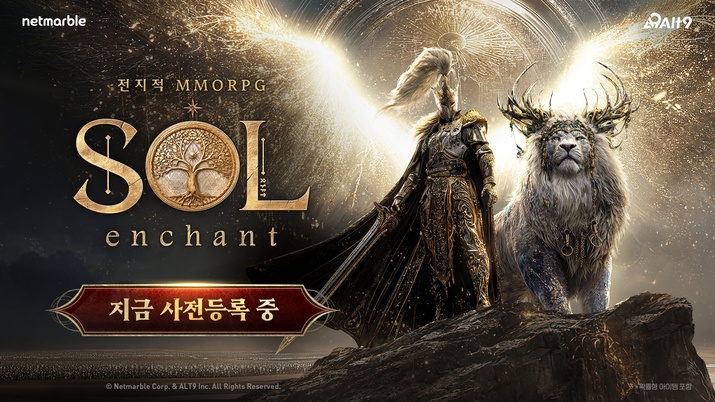
The biggest challenge in today's gaming industry is capturing players' time. Amidst the hustle and bustle of modern life, new titles are flooding the market, and entertainment options beyond gaming are exploding. As a result, securing playtime is becoming increasingly difficult. MMORPGs, in particular, often demand significant time and financial investment, which can be a deterrent for players considering new titles.
It's in this landscape that 'Sol: Enchant' is set to launch this June. Developed by Alt-Nine, a nascent studio spearheaded by the veterans behind Lineage M, and published by Netmarble, this new PC and mobile MMORPG aims to break the mould. The game champions a bold approach: 'zero play stress.' We got a firsthand look at the media showcase, and here's what we discovered.
Its core philosophy is twofold. Firstly, gameplay-wise, it simplifies things with a one-button reward claim system and a 'Squad Mode' allowing two characters to be active in the field simultaneously for automated hunting, thereby reducing player burden. Economically, it empowers players through 'Nine,' a currency earned through gameplay, which grants significant influence via 'Divine Authority.' Furthermore, it enables trading of both in-game currency and premium items, fostering greater freedom and lowering the entry barrier.
Simply logging in occasionally for essential management is all that's needed.
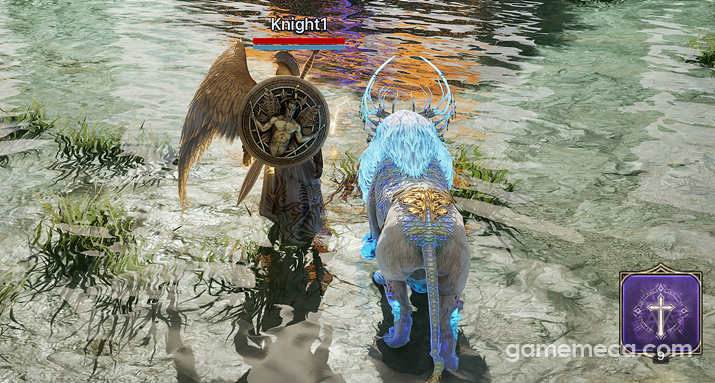
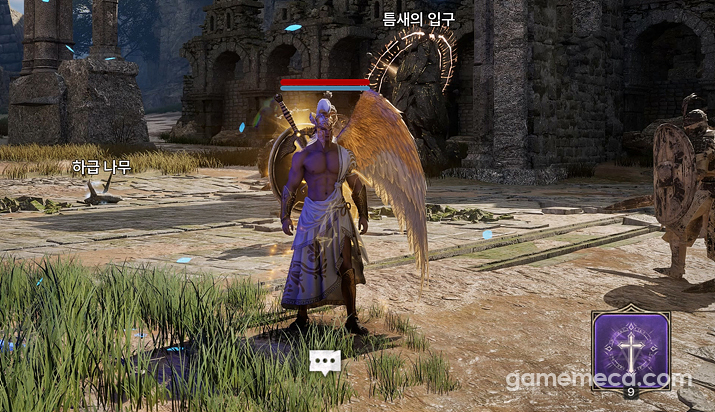
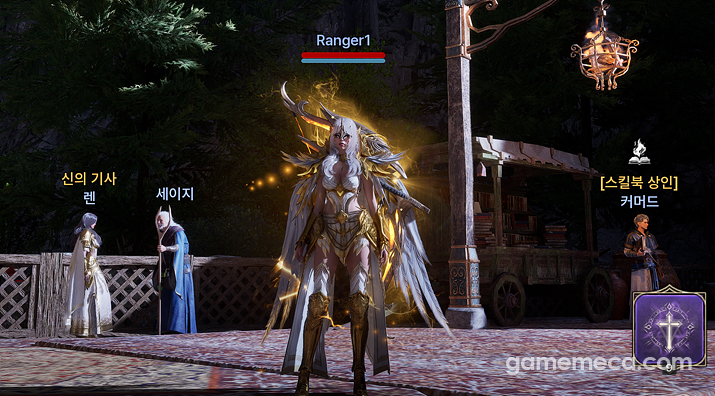
Sol: Enchant centres around a 'god' theme. It narrates humanity's struggle against a cruel fate after the gods' departure. Players assume the role of a special successor who senses divine power, wielding it on the battlefield. This narrative is woven into gameplay through the 'Divine Authority' system and 'God Armors' (cosmetic gear) reminiscent of Greek or Norse mythology. On PC, the high-quality graphics powered by Unreal Engine 5 are a visual treat.
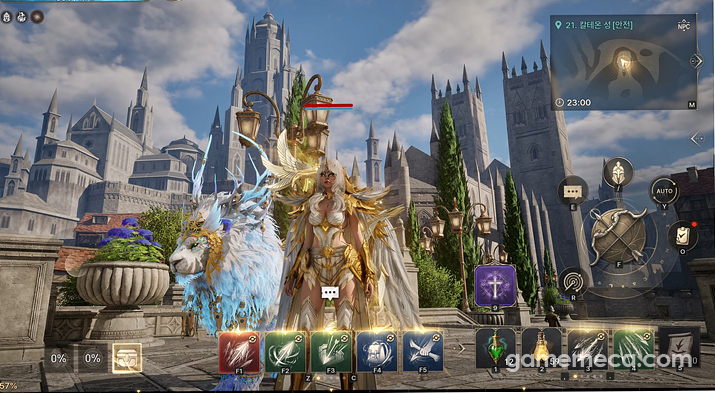
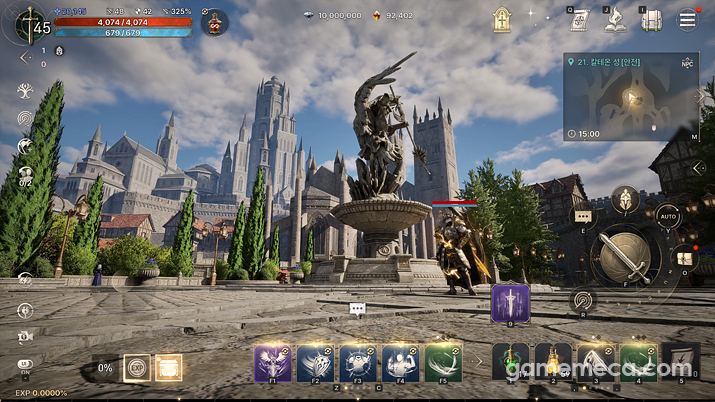
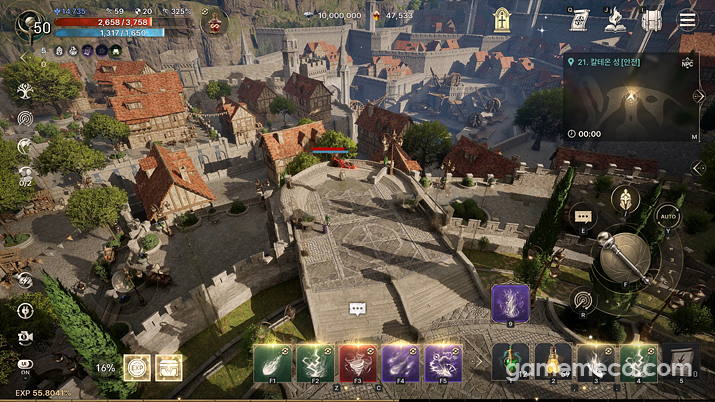
At its core, the structure mirrors traditional MMORPGs. There are three classes: the Knight with sword and shield, the Ranger with a bow, and the Mage wielding magic. Questing and combat are supported by auto-play features. The aforementioned 'God Armors,' summoned 'Spirits' to aid in combat, and character accessories are the primary premium items. A collection system allows players to enhance stats by gathering various items. Additionally, growth systems like runes and specialisations, along with dungeons focused on specific resource gathering such as experience points, are included.
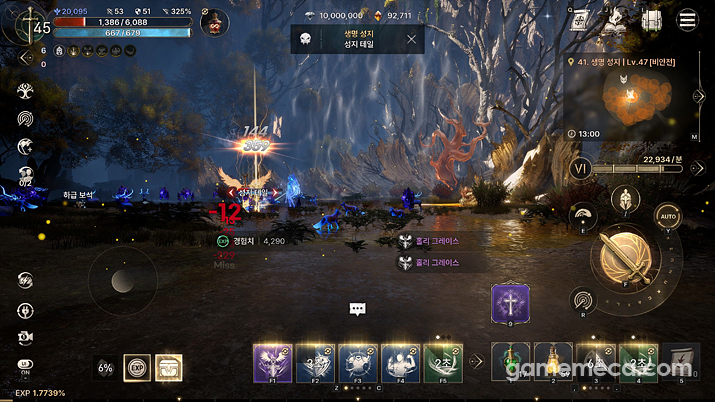
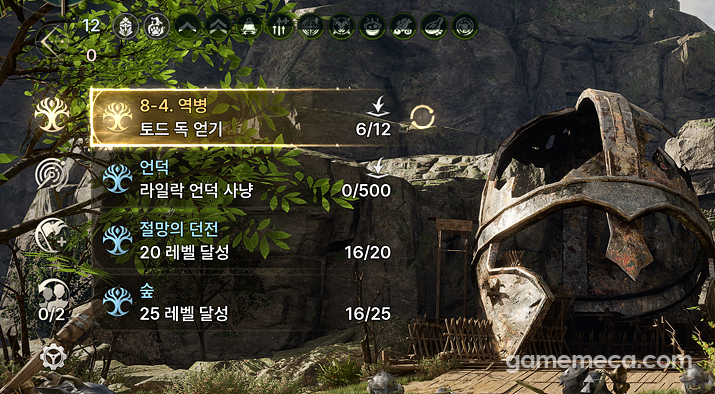
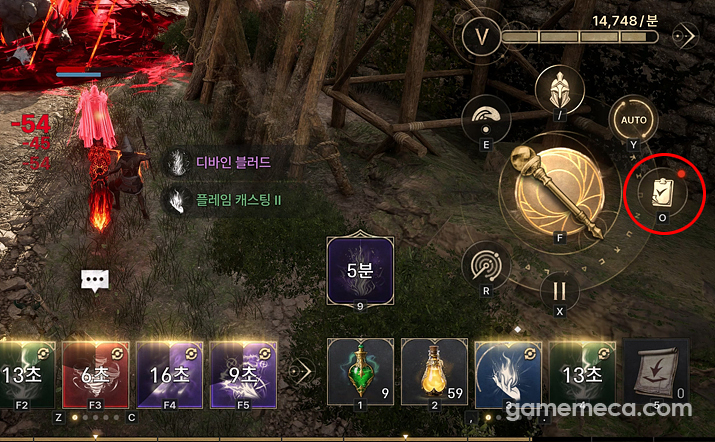
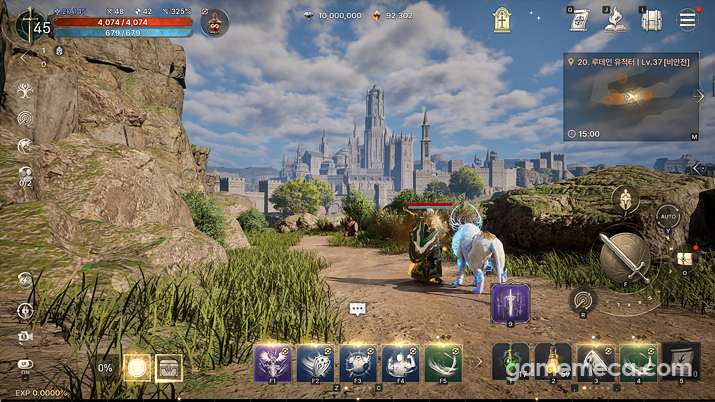
However, the game clearly prioritises reducing player fatigue. The media showcase highlighted the one-button reward claim and the Squad Mode for managing two characters concurrently. The one-button feature, activated by a click, touch, or the 'O' key, allows players to collect all daily, weekly, and monthly rewards at once, eliminating the need to navigate through menus. This significantly cuts down on time spent on trivial tasks, letting players focus on core progression elements.
Squad Mode allows players to summon other characters from their account into the field. In certain field areas, these secondary characters can be directed to auto-hunt, ensuring continuous combat and accelerating progression. This feature alleviates the burden of 'raising multiple characters,' often considered a chore in MMORPGs.
Items can be registered for automatic sale through the 'Public Purchase' system, generating in-game currency. Furthermore, while not available during the showcase, a 'No-Access Play Mode' will be supported at launch. Players can set a character's schedule for desired activities, allowing for continuous 24-hour play even when offline.
These various convenience features are designed to allow players to keep up with the game's progression by simply logging in for brief periods to manage essential tasks. The key question is whether this 'niche-time' MMORPG approach will successfully motivate busy gamers.
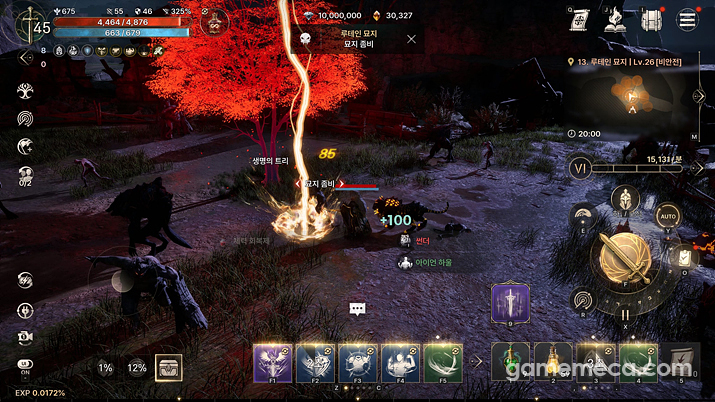
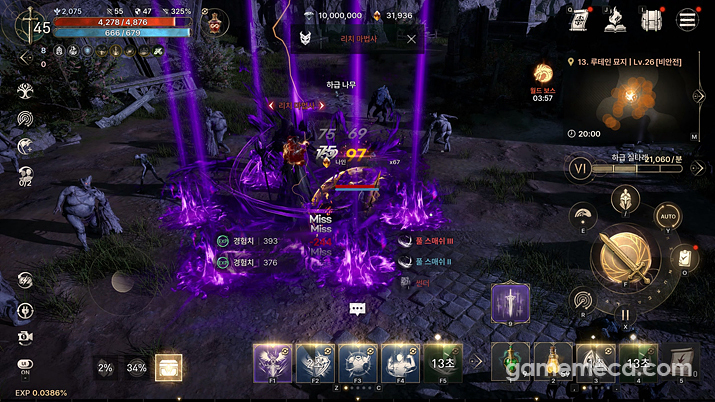
Divine Authority and the core in-game currency 'Nine'
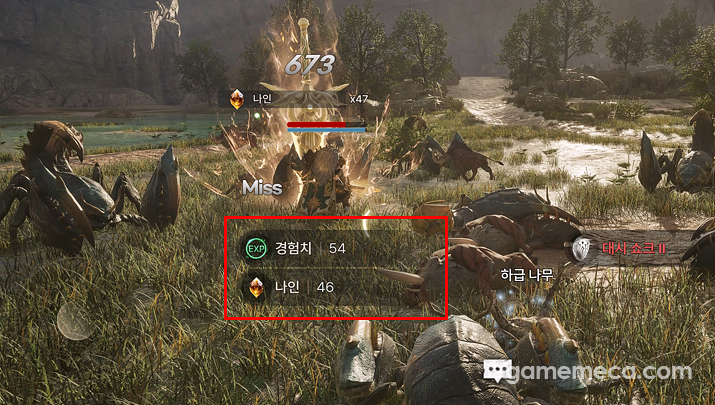
In Sol: Enchant, players are rewarded with 'Nine' through various activities like hunting, questing, and mission completion. The game is structured so that Nine is earned alongside experience points with every monster defeated, accumulating in substantial amounts through regular play. While the constant influx of Nine might initially suggest an overabundance of currency, its extensive uses are designed to prevent it from becoming a redundant resource.
To wield Sol: Enchant's signature 'Divine Authority,' significant consumption of Nine is paramount. A primary condition for ascension to godhood is the amount of Nine expended, and using Divine Authority also requires Nine. Furthermore, Nine itself serves as a progression resource and is utilised in research for crafting top-tier equipment. The developers' choice to link Nine consumption to godhood stems from its potential to gauge a player's engagement level.
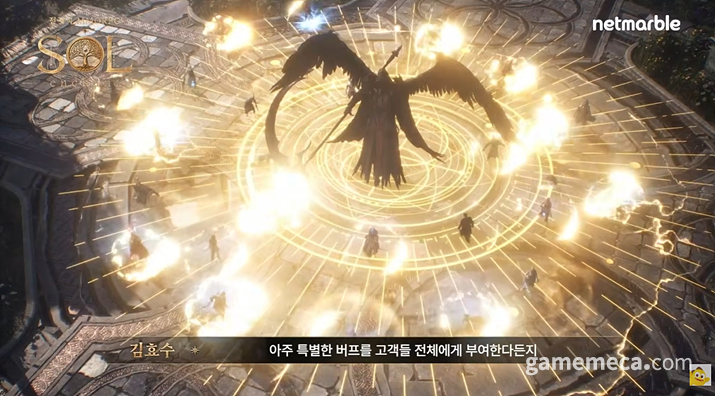
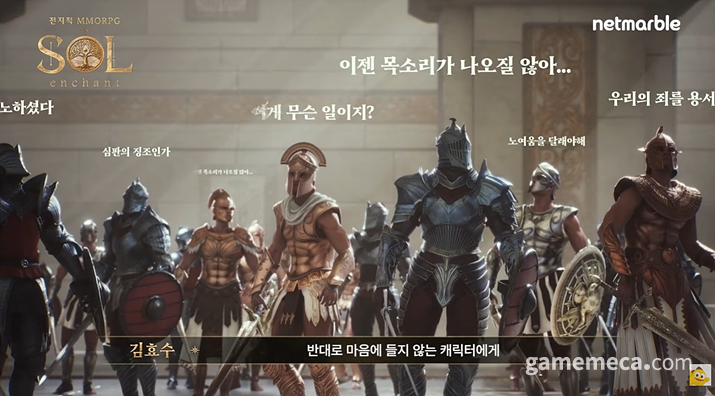
Godhood is divided into three tiers: server-specific gods, world-overseeing Arch-Gods, and absolute deities ruling all worlds. We were able to experience the 'God' tier Divine Authority firsthand. It includes four types: 'Punishment,' which unleashes area-of-effect attacks like firestorms; 'Creation,' which summons monsters to aid in battle or create weapons; 'Grace,' providing buffs to allies; and 'Control,' which can impose chat restrictions, declare PvP or safe zones, or summon specific characters, impacting other users.
'Punishment' acts as a direct attack, like dropping fire on a group of monsters. 'Creation' allows for summoning formidable creatures, expanding tactical options for focusing on hunting or retreating behind summoned allies. Each Divine Authority has a Nine consumption cost and a cooldown, with more potent effects incurring higher costs. These measures seem to be in place to prevent the abuse of powerful abilities and mitigate harm to other players.
Nine also plays a crucial role in the trading economy. Players can purchase rare weapons, armour, and hero skills from NPC merchants using Nine. Additionally, a dedicated shop allows for the purchase of premium items like God Armors, Spirits, and accessories with Nine. It's also possible to convert earned Nine and experience points into an item called 'Nine Core,' which can then be sold on the marketplace for Diamonds (premium currency). Duplicate God Armors or Spirits can be converted into summon tickets by consuming Nine, which are also tradable.
In essence, Nine serves as a primary reward, a key resource for character progression, and a crucial ingredient for acquiring Divine Authority. Despite its abundant acquisition through gameplay, its extensive applications ensure its value remains undiluted. Players aspiring to godhood can acquire additional Nine by purchasing other users' Nine Cores. Conversely, non-paying players can earn Diamonds by selling 'Nine Cores' or duplicate God Armors. This system, centred around Nine, fosters a symbiotic economy where various player tiers can coexist.
An Ambitious Project from MMORPG Aficionados: Will it Shake Up the Stalwart Market?
We've now examined Sol: Enchant through the media showcase. The game aims for concise, impactful gameplay and an economy that encourages player interaction and coexistence. Coupled with the powerful Divine Authority system, it seeks to deliver the classic MMORPG thrill of players forging their own narratives, rather than strictly adhering to the developer's intent.
Alt-Nine, the development studio, boasts a team with extensive MMORPG development experience, including key figures from Lineage M. The question on everyone's mind is whether Sol: Enchant, meticulously crafted by these MMORPG enthusiasts, can inject fresh dynamism into a gaming market currently dominated by established titles.
This news was translated by AI.

Kim Mi Hee, Reporter
Let's not lose our initial resolve. Meticulously, one by one.risell@gamemeca.com
READ MORE
-
 Ace Combat 8 Returns with a Captivating Narrative: An Experience Report
-
 Party Extraction with a Spoonful of Lethal: 'Tomb Busters'
-
 A Bitter Aftertaste of Mannerism in Deep Narrative Two Shots: 'Coffee Talk Tokyo'
-
 Azur Promilia Adds Tag Action to Subculture Palworld
-
 Subnautica 2: The Alluring Depths and Suffocating Terror Beyond the Dazzling Scenery
-
 Leehwan is Closer to 'Subculture Crimson Desert' Than 'Subculture GTA'
-
 HOMM: Olden Era, a time machine that instantly steals 40 hours
RECOMMENDED NEWS
MOST POPULAR NEWS
- Nikke Director Yoo Hyung-seok: "Initially Thought of Mustang and Hanson's Setting"
- [Today's steam] Highly Rated Zombie Survival FMV New Release 'Sub-Zero'
- Palworld to Officially Launch on July 10 After 2.5 Years
- Subculture Game Battle: A Report Card of Major New Releases Over the Past Year
- [Game Recs] 5 New Steam Titles Rated 'Overwhelmingly Positive' for Free
- "Low-Quality Games Out" PS Store Bans Publisher Uploading 1,200 Titles
- PlayerUnknown's New Game 'Go Way Back' Officially Canceled, Refunds Issued
- [Today's Steam] 10,000 Won for This Quality? New Game 'Fatekeeper' Garners Interest
- Clash of Giant Monsters and Mechs: GUNDAM ROGUE ORBIT Announced
- New Princess Maker-style Game 'Cradle of Moonlight' Revealed, Featuring Vampire Daughter Raising
MEDIA PARTNERSHIPS


GAMEMECA SNS